

HEALTHCARE PRODUCT SEO/AEO CASE STUDY: FROM IDEA TO LEADERHow We Took Kodjin From a Brand-New Domain to a Recognized FHIR Server Competitor
Took Kodjin from zero organic presence to a recognized FHIR server competitor in 4 years. Starting in August 2022 with a brand-new domain, GrowPad built authority against Microsoft, HL7.org, and InterSystems: Domain Rating grew 14 to 52, the flagship “FHIR server” keyword reached position 4, and organic search became a channel delivering 5+ SQLs per month with $100k+ ACV.
Case Study Results
SQLs per month for a niche product
Domain Rating growth during the engagement (Ahrefs)
flagship “FHIR server” keyword position
ACV of leads we gained
Starting point
Kodjin is a FHIR (Fast Healthcare Interoperability Resources) server product built to help healthcare organizations and developers build interoperable, standards-compliant health data systems.
When we took on the engagement in August 2022, Kodjin was a brand-new domain. We started with zero organic traffic while entering a category where the competitors include Microsoft, the HL7 standards body itself, and InterSystems.
Working on a healthtech product SEO/GEO case study for over 4 years, we took Kodjin FHIR from invisible to a credible, mentionable name in that same conversation.
Project overview
Client: Kodjin
Region: Primarily USA, tracked worldwide
Industry: Healthcare interoperability / FHIR server software (B2B SaaS, YMYL vertical)
Project duration: August 2022 – June 2026
Project goals
– Drive leads with ROI higher than paid ads
– Take Kodjin from a brand-new, zero-authority domain to a credible, visible competitor in FHIR server search
– Build deep topical authority around the FHIR server category specifically, not just isolated keyword wins
– Build a link profile that lasts
– Protect commercial lead generation as the search landscape shifts toward AI-driven, zero-click answers
Case study challenges & solutions
When we began in August 2022, Kodjin was nowhere in Google search. A brand-new domain with no backlink profile, no ranking content, and no track record in a category where the competitors include Microsoft and the organization that literally authors the FHIR standard.
Before GrowPad
With GrowPad
Want to build real search authority against much bigger competitors?
Step 1
Building the visibility from zero against genuine giants
Kodjin launched into search with a Domain Rating of 14 and no track record, in a category where the competitive set includes Microsoft (its open-source FHIR server implementation carries a Domain Rating of 97), the HL7 organization itself (hl7.org, DR 83, the literal author of the FHIR standard), and InterSystems (DR 76).
Our solution: An authority-building program
This is where GrowPad’s team always starts with a zero-authority domain, building the fundamentals before chasing rankings:
- We built a structured content calendar from month one, rather than publishing opportunistically
- We ran a consistent, monthly link-building program from the earliest months of the engagement
Result:
While working on Kodjin’s healthtech product SEO/GEO case study, the Domain Rating climbed from 14 to 52 (Ahrefs) over two years. Kodjin didn’t overtake Microsoft or the HL7 standards body for the single hardest generic query. An unrealistic bar for almost any independent vendor, but it became one of the few independent FHIR server brands, alongside names like Firely (DR 54) and HAPI FHIR (DR 65-77), that shows up in the conversation at all.
Step 2
Earning a place at the top for the most valuable commercial page
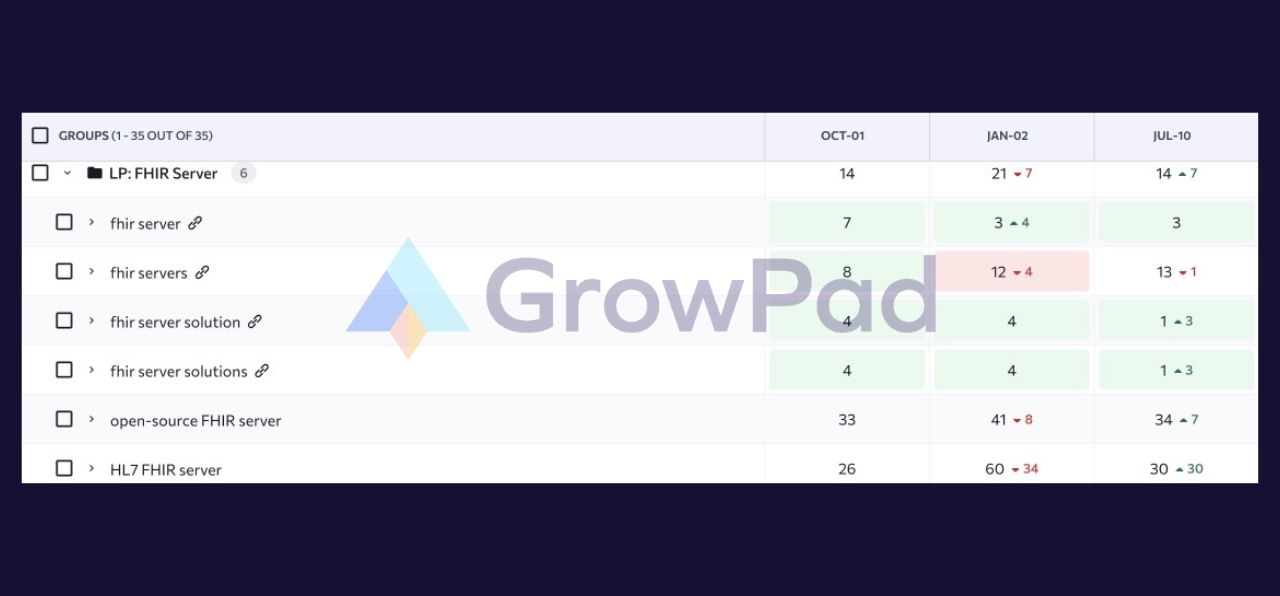
“FHIR server” is the flagship commercial query we started at position 100+.
Our solution: Concentrated link equity and manual optimization on the priority page
- We directed the majority of link placements at Kodjin website’s homepage and FHIR server page specifically, rather than spreading links evenly across the site
- GrowPad team ran recurring manual content optimization passes on the FHIR Server landing page
- We tracked the keyword weekly via a dedicated SE Ranking project to react quickly to movement
Result:
It’s one of the best milestones of this healthcare product SEO case study. The keyword climbed from position 100+ to position 7, and reached position 4 by August 2024, which is its best recorded position.
Step 3
Turning one good ranking into topical authority
A single high-ranking page doesn’t make a brand authoritative. Google (and buyers) need to see depth across the whole FHIR topic.
Our solution: A sustained, multi-year content development
- We delivered monthly content briefs for new articles, consistently, from 2023 through 2026
- We ran recurring manual content optimization cycles on existing articles as competition and search intent shifted
- We expanded topics beyond the core FHIR cluster (data analytics, data quality, interoperability standards, EHR topics) once the initial FHIR cluster matured
Result:
Dozens of articles reached top-3 to top-1 rankings for their target queries, including pages on healthcare data warehousing, data quality in healthcare, and healthcare data mining, which (per current Ahrefs data) remain among the site’s top-traffic pages today, each ranking position 3 or better for its lead keyword.
Step 4
Query cannibalization diluting content that should have been winning
As the content grew, several pages began competing with each other for the same queries.
Our solution: Recurring cannibalization audits and content restructuring
- We ran dedicated keyword cannibalization analyses (first flagged January 2024, repeated through 2025-2026)
- We rebuilt internal linking between competing pages to signal a clearer hierarchy to Google
Result:
Previously cannibalized articles climbed independently and reached top-3 by March 2024, and those pages remain top-3 rankers for their respective lead terms as of July 2026 Ahrefs data.
Step 5
Widening beyond FHIR into a second commercial vertical
FHIR server search alone has a ceiling. Kodjin’s broader ambitions in healthcare analytics needed their own commercial page and their own path to visibility, essentially starting the authority-building process over again for a new topic.
Our solution: A dedicated Healthcare Analytics landing page and priority-keyword tracking
- We launched a “healthcare analytics solutions” page as a new commercial page (Fall 2025)
- We applied the same playbook that worked for the FHIR cluster: dedicated keyword tracking, manual optimization, targeted internal linking
- We tracked three priority commercial terms specifically (healthcare analytics platform, healthcare analytics software, healthcare analytics solution)
Result:
Within about 6 months from the launch, the page reached positions 12, 14, and 15 for its three priority terms (February 2026). A genuinely fast result for a brand-new commercial page in a new vertical.
Step 6
Building links for 4 years without triggering a penalty
A multi-year healthcare product link-building strategy carries real risk. Low-quality or manipulative link placements are exactly what draws Google penalties, and even legitimate strategies see natural link decay over time as sites shut down or remove old posts.
Our solution: Editorially placed link building
- We focused on outreach, guest posts, and listicle placements rather than any manipulative scheme
- We continuously refreshed the link-building strategy as the site’s authority grew (moving from broad outreach toward more targeted, priority-page-focused placements)
- We monitored the backlink profile on an ongoing basis rather than “set and forget”
Result:
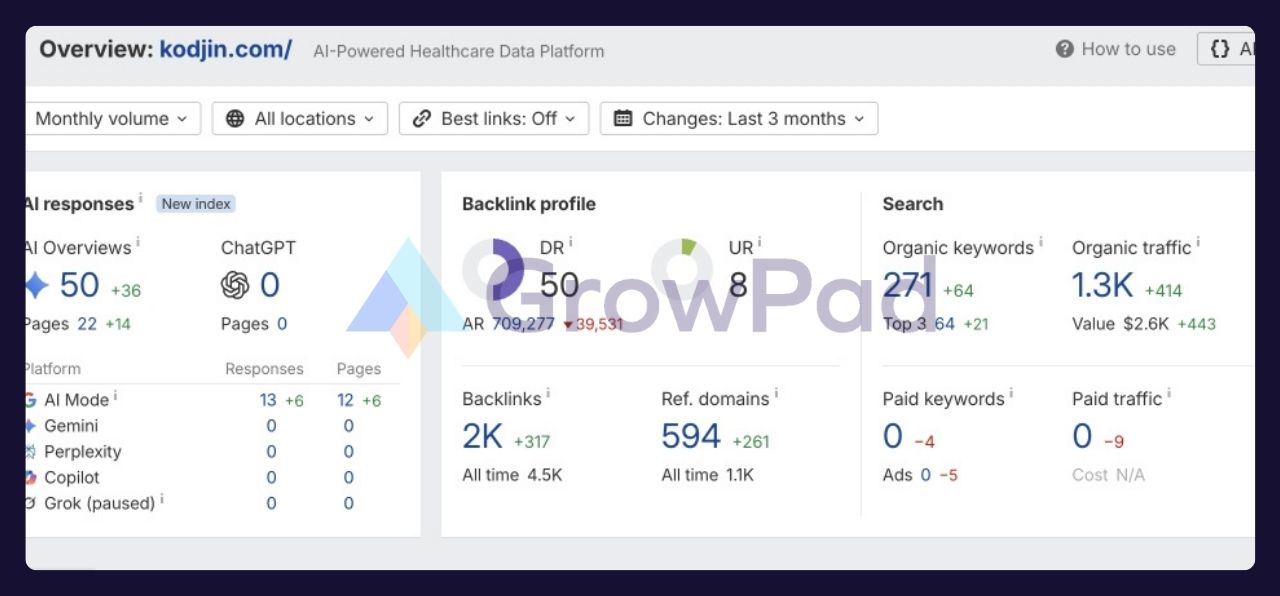
Zero manual actions or penalties on record across nearly 4 years. As of July 2026, Kodjin’s live backlink profile stands at 2,071 links from 559 referring domains (Ahrefs). A substantial, currently active link base built entirely without Google penalty.
Step 7
Defending lead generation as AI reduces informational search traffic
Industry-wide, Google’s AI Overviews and other answer engines increasingly resolve informational queries (“what is FHIR,” “FHIR vs HL7”) directly in the results page, without a click. A genuine headwind that has nothing to do with Kodjin’s content quality and everything to do with how search itself is changing.
Our solution: Deliberately protect commercial pages
- We shifted a meaningful share of monthly optimization effort toward the priority commercial pages (FHIR Server, Healthcare Analytics) rather than defending every blog post equally
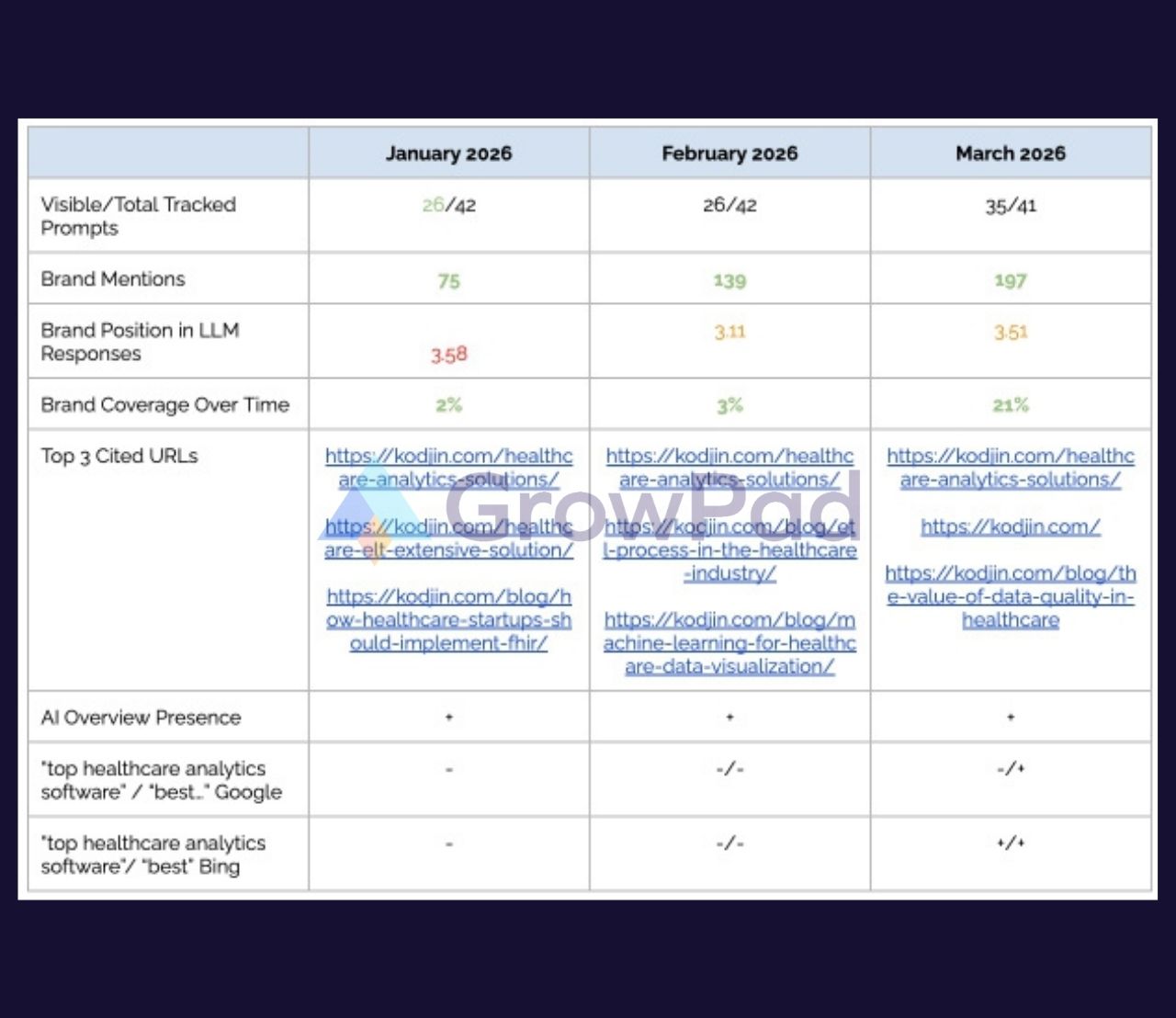
- We began tracking AI-referral traffic and Bing visibility as distinct KPI lines, so we could react to where visibility was actually shifting
- We accepted that informational/blog traffic would decrease due to the AI-driven shift, and treated that as a trade-off worth making deliberately, not a failure to fix
Result:
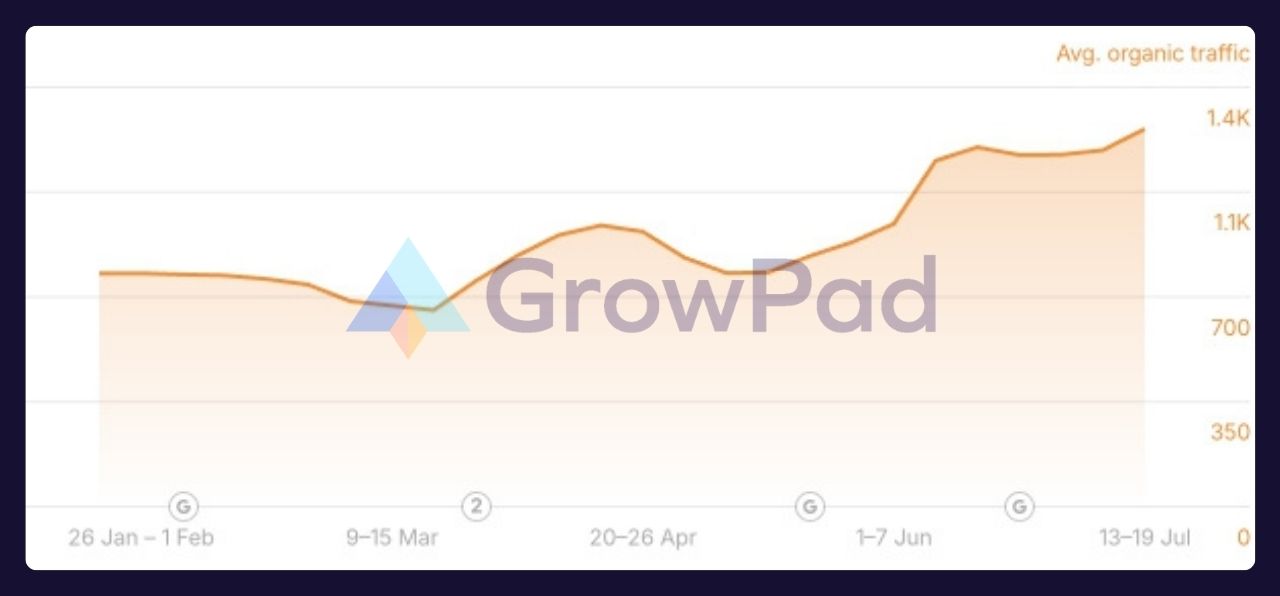
In April 2026, a month in which site-wide traffic fell 15%, traffic to priority commercial pages specifically rose 11%, driven by new traffic to the homepage. Today, per Ahrefs’ current top-pages data, Kodjin’s highest-traffic pages are still its informational blog content; the commercial pages carry less raw traffic but are exactly where we’ve concentrated defensive effort, which is why lead-relevant traffic has held up even as top-of-funnel clicks dropped.
Case study key results
Project duration: August 2022 – June 2026. Data from Ahrefs and SE Ranking.
What to apply
Kodjin’s honest competitive set includes Microsoft and the HL7 standards body itself; the real win wasn’t beating them on the single hardest term, it was building enough authority to compete meaningfully against the mid-market names and show up in the conversation at all.
Spreading links evenly across a site is often less effective than directing the majority of placements at the one or two pages that actually convert.
Nearly four years and thousands of backlinks with zero penalties is the result of choosing editorial, outreach-based placements over shortcuts.
As answer engines increasingly resolve informational queries without a click, protecting lead generation means deliberately concentrating effort on commercial pages.
Ready to build real authority against much bigger competitors?
With GrowPad’s expertise, you can build the same kind of durable SEO authority, no matter how large the competitors in your category are.
Frequently Asked Questions
1. How do you compete in SEO against giants like Microsoft or an industry standards body?
You don’t try to beat them on the single hardest, most generic term on day one. You build sustained topical authority over years, concentrate link equity on your highest-value pages, and measure success against the realistic competitive set (established mid-market players) rather than only the very largest players. Kodjin’s Domain Rating grew from 14 to 52 over roughly two years by doing exactly this.
2. What made ranking for “FHIR server” and similar keywords so difficult?
The category includes Microsoft, the HL7 organization that literally writes the FHIR standard, InterSystems, and major cloud providers. It also sits in Google’s “Your Money or Your Life” (YMYL) content category, which raises the bar for trust and accuracy signals.
3. How is AI search (AI Overviews, answer engines) affecting Kodjin’s healthtech product traffic?
Informational queries increasingly get resolved directly in AI-generated answers without a click. It’s an industry-wide trend, not specific to Kodjin. Our response has been to concentrate optimization effort on commercial pages rather than trying to defend every informational page equally, which is why priority commercial-page traffic grew even in a month when total traffic declined.
4. Is a multi-year SEO retainer necessary, or can results be achieved faster?
It depends on the niche and the competitive set. Kodjin’s partnership with GrowPad reflects the reality of building authority from zero in a YMYL, technical niche against entrenched, well-funded competitors. Less competitive categories can see meaningful results faster.
