

DEDICATED SAAS CONTENT MARKETING AGENCY
GrowPad provides SaaS content marketing services that combine strategy and production. A SaaS content marketing consultant maps buyer intent and editorial priorities; our team creates comparison pages, landing pages, and articles designed to support qualified demos and AI visibility.


visibility in 6 months
organic traffic in 6
months
demos in 5 months
Tech & SaaS clients
served








Your blog is full of generic posts that don’t reflect your product expertise. Articles about “pet market statistics” and “how to start a nail salon” when you sell booking software. The homepage carries all your SEO value. Non-branded search barely exists.
Read your top 3 blog posts and ask: “Could a competitor put their logo on this?” If yes, you’re producing filler, not building authority.
This booking plugin had 160 blog posts – mostly off-topic filler – and all SQLs came from one branded page. We audited every article, flagged 59 for rewrite, built brief templates for comparison and alternatives pages, and launched industry-specific landing pages targeting non-branded use cases. Our content writers for SaaS replaced volume with structure.
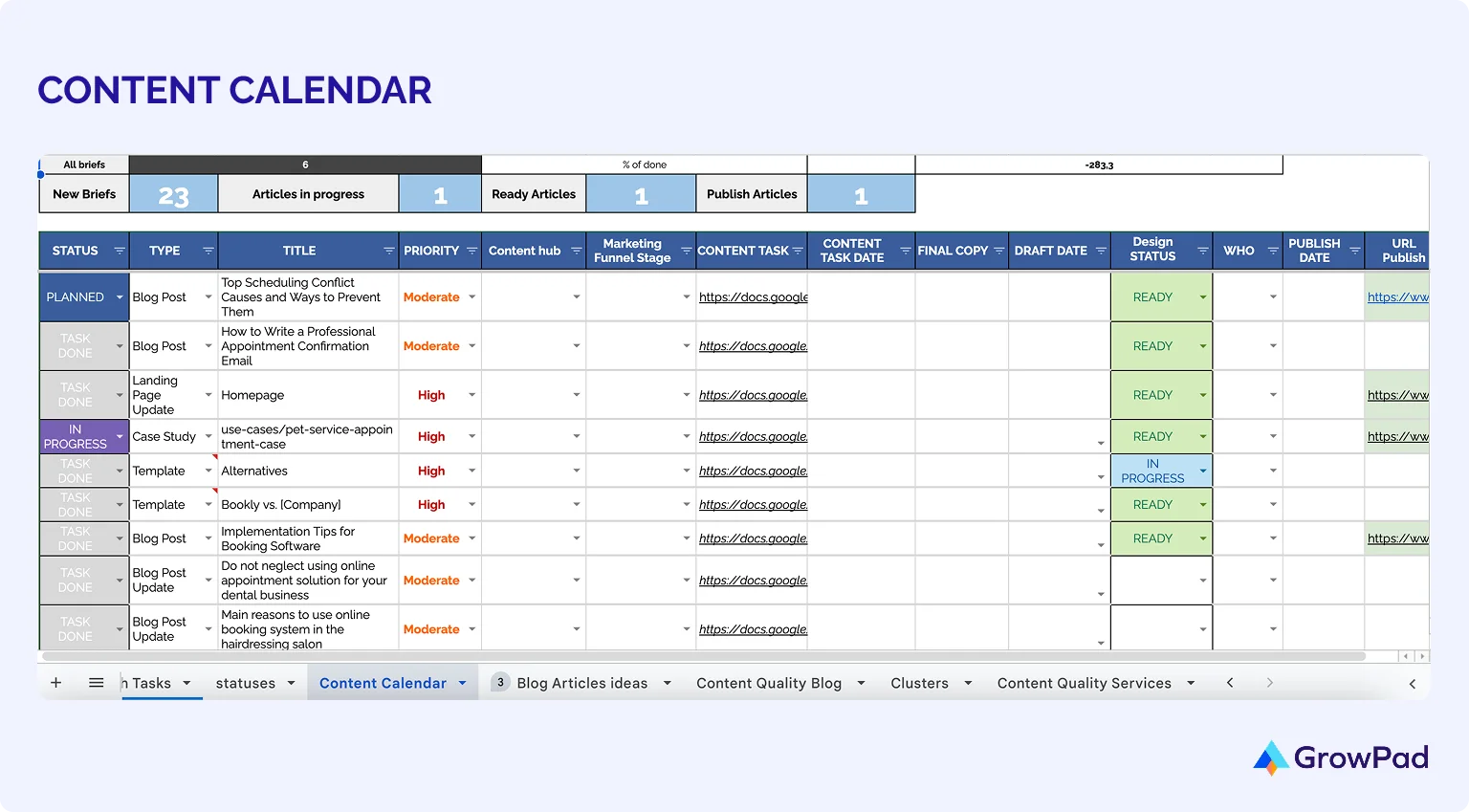
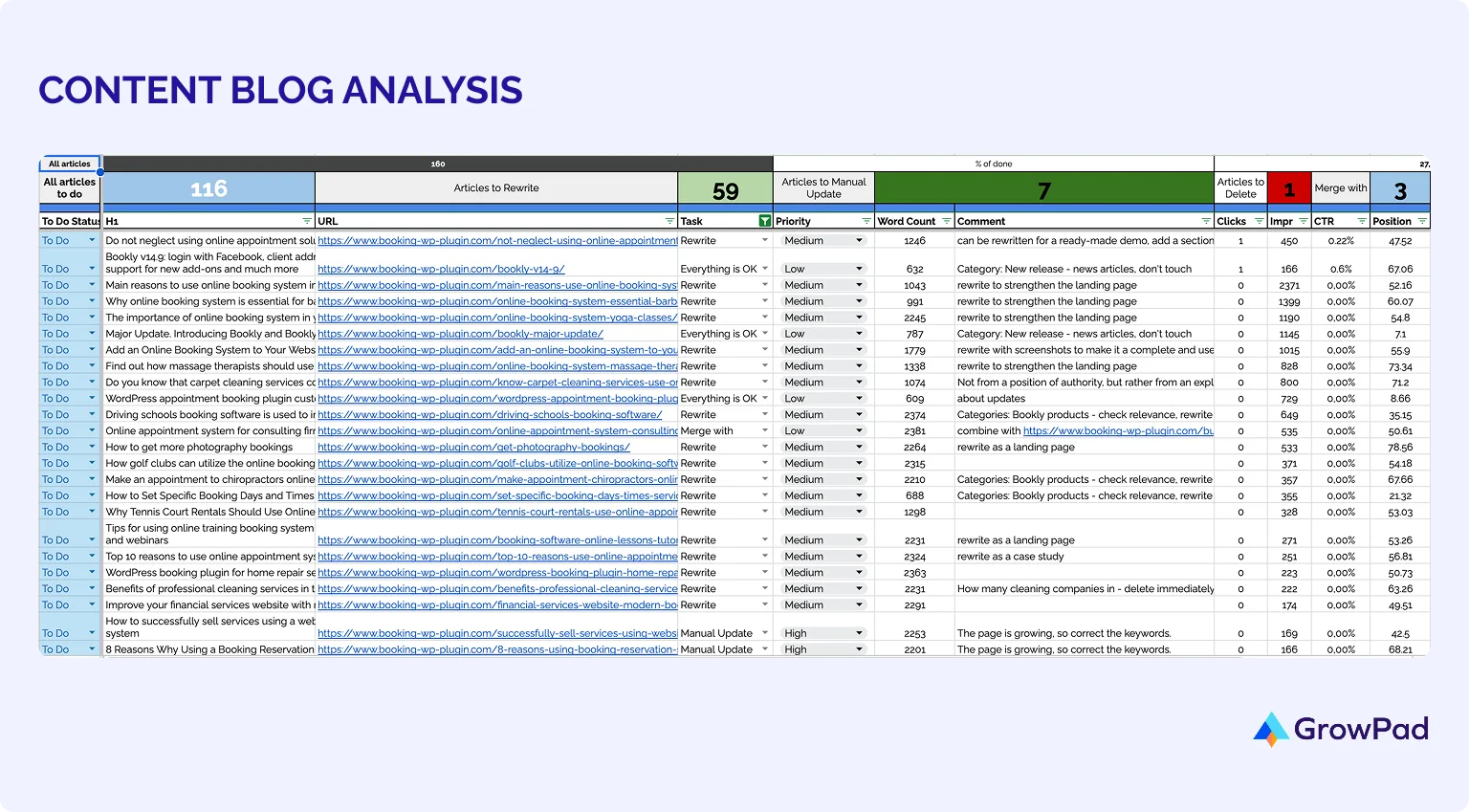
Result: +10% SQLs in 3 months. +10% non-branded organic SQLs in 6 months. Stable rankings during homepage overhaul. New LLM visibility.
Publishing 10–30 articles/month, mostly “What is…” pieces. No buyer personas in briefs. Multiple pages cannibalizing each other. Service pages getting impressions, but no demos.
Check your top 5 landing pages in GA4. If bounce rate exceeds 70% and demo requests are flat, your content speaks to Google, not to the people who pay.
This fintech SaaS published 10+ articles per month – all generic, all interchangeable. We audited the content library, found 30%+ cannibalization, and rebuilt the blog architecture with new content clusters. We also introduced a brief system mapping every article to a buyer persona, search intent stage, and conversion goal. Definitional content gave way to scenario-driven MOFU/BOFU assets.
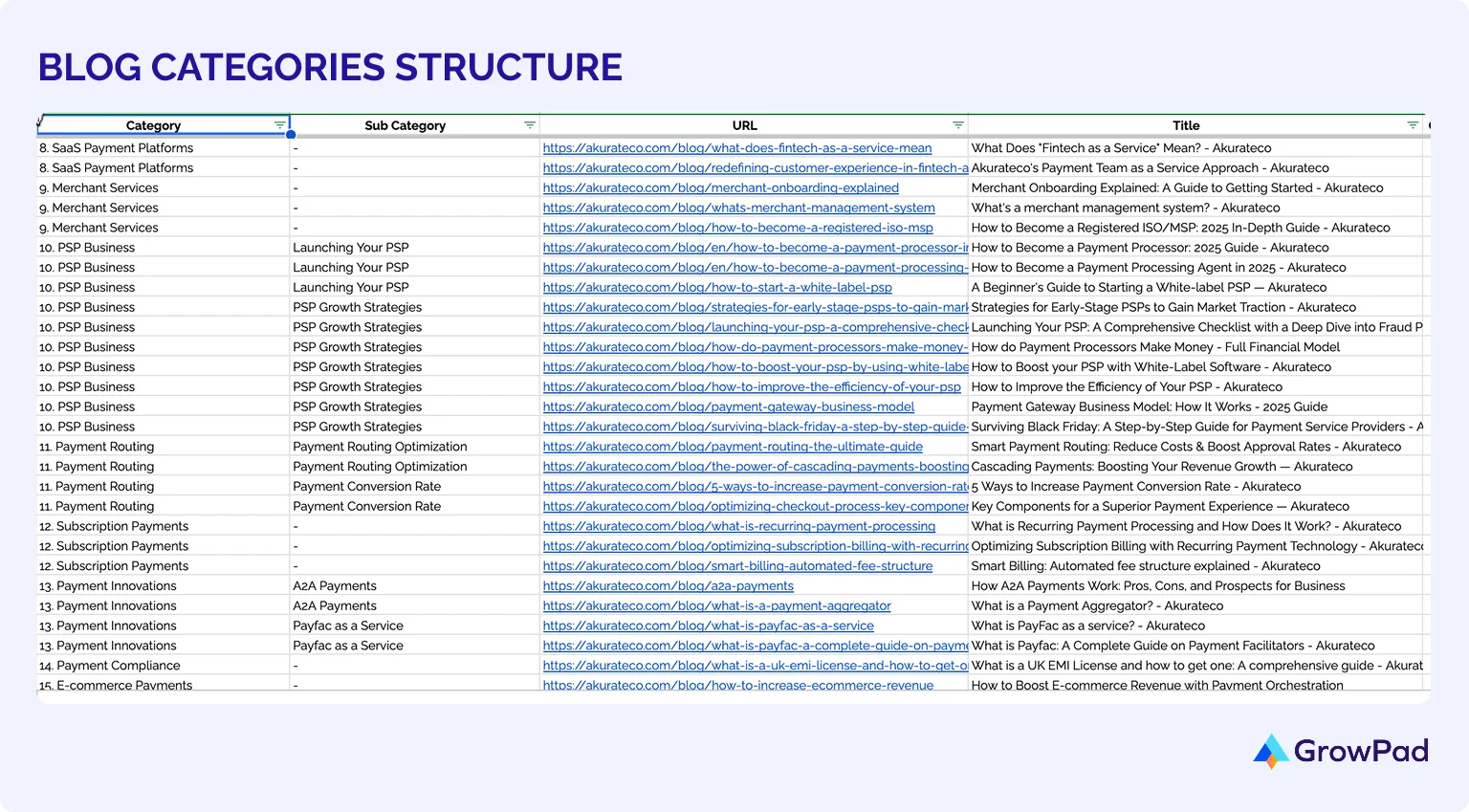
Result: Priority pages from #20–30 → Top-5 in 5 months. Organic MQLs doubled. Most stable pipeline source.
Multiple blog posts compete for the same CRM queries. Five articles about “sales automation,” four about “CRM for small business” – all cannibalizing each other. You keep publishing, but rankings don’t improve, and the pipeline stays flat.
Filter your top keywords in GSC by URL. If several pages compete for the same query, cannibalization is the problem.
NetHunt had strong traffic but weak SQLs. Multiple blog posts competed for the same CRM queries, with five articles on “sales automation” alone. We ran a full content quality audit, merged 27+ competing pages into authoritative URLs, built comparison page briefs, and implemented a CTR improvement program with schema markup and SERP snippet optimization.
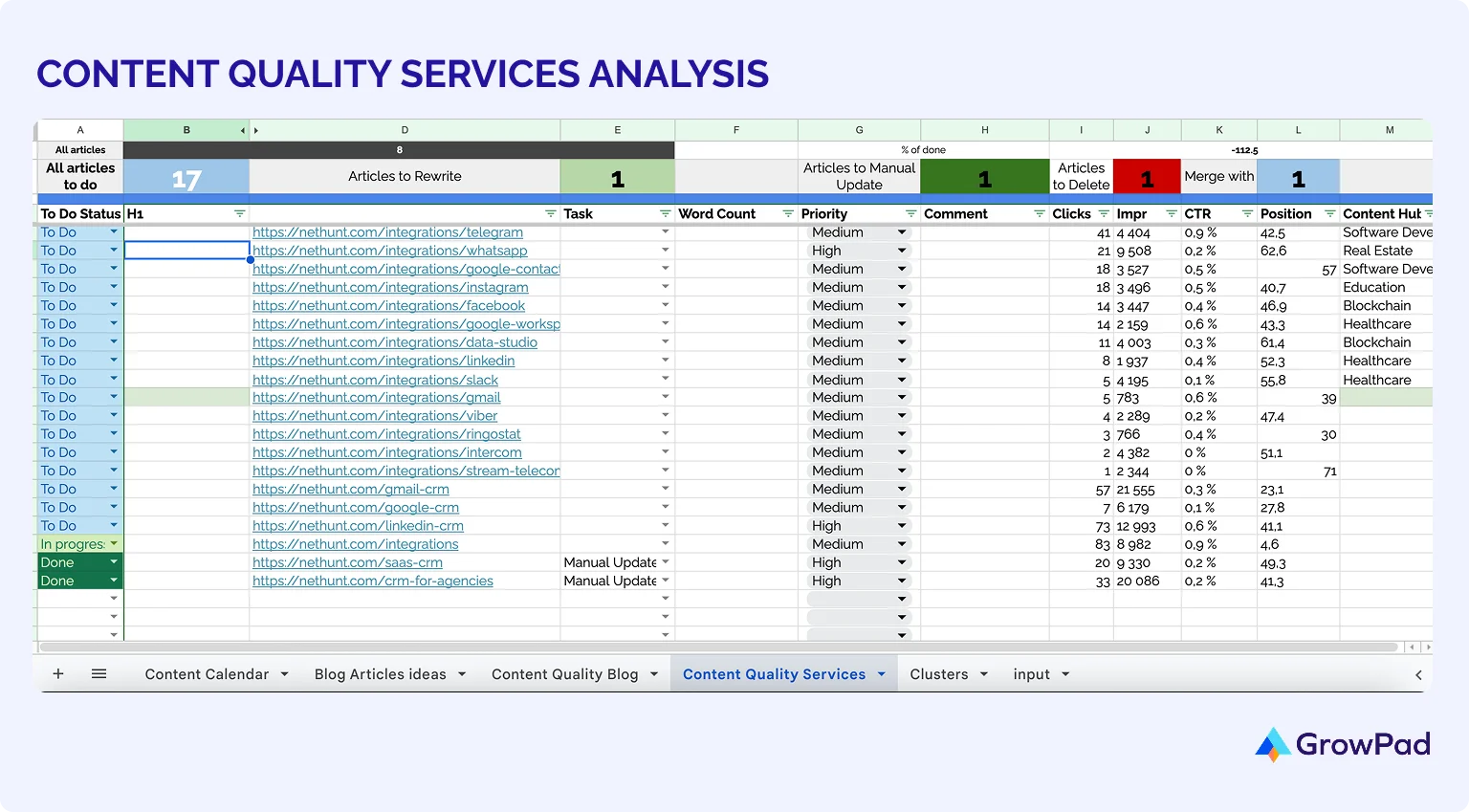
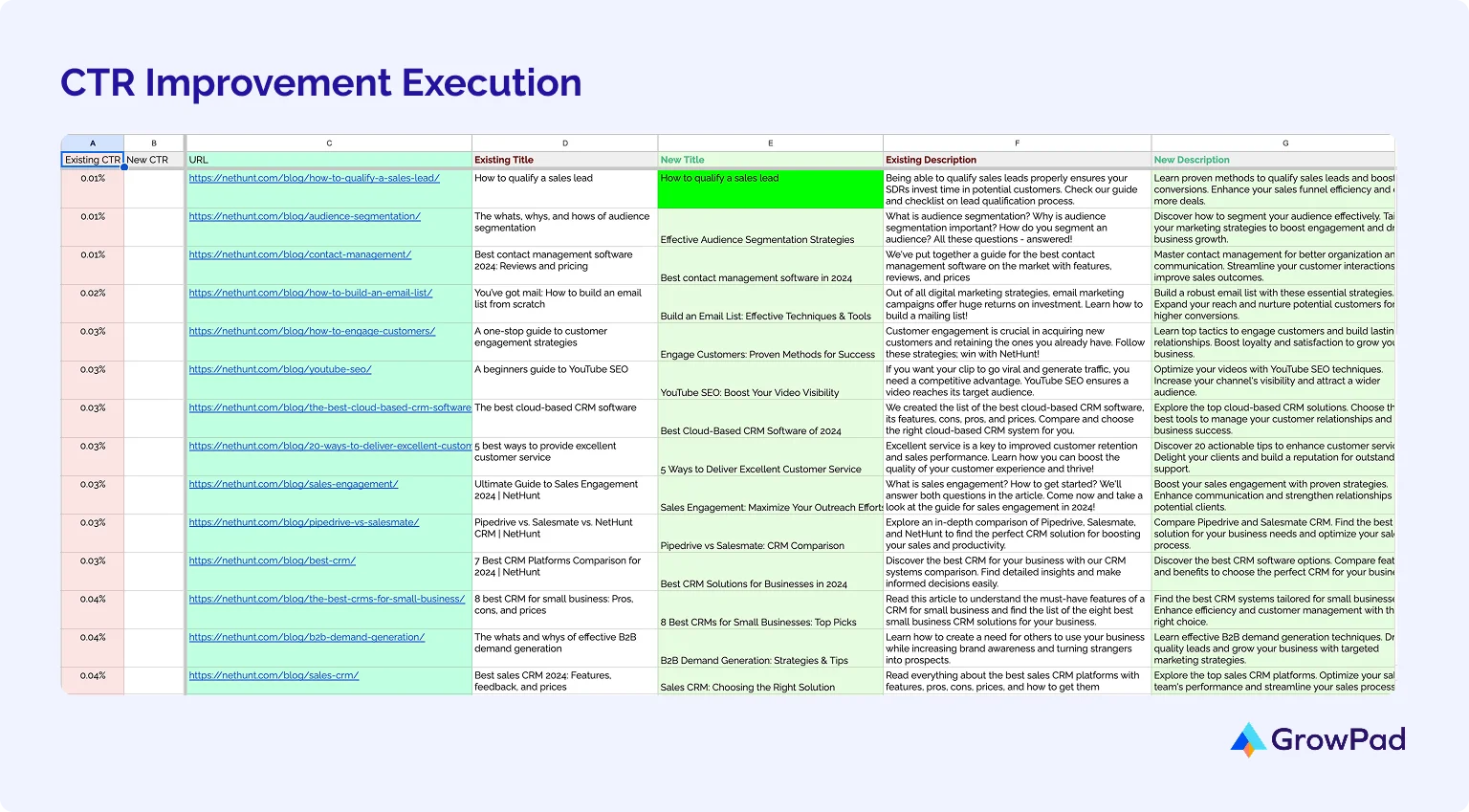
Result: Revenue pages from TOP-20 → TOP-5. +25% SQLs in 6 months. New MRR up despite fewer total pages.
Blog gets steady traffic, but lead forms stay quiet. You publish regularly, yet can’t connect content to the pipeline. Service pages get impressions but rank outside the Top-10 for money keywords. You don’t know which pages actually generate leads.
Open GA4 and compare your top 10 organic landing pages with your top lead-generating pages. If there’s little overlap, your content and conversion strategy are misaligned.
Blue Carrot had 118 blog articles but couldn’t connect content to pipeline. We audited every page, ranked service URLs by actual leads generated, restructured content around industry clusters, and mapped every new article to a marketing funnel stage. Our SaaS content marketing services turned traffic-focused publishing into lead-focused architecture.

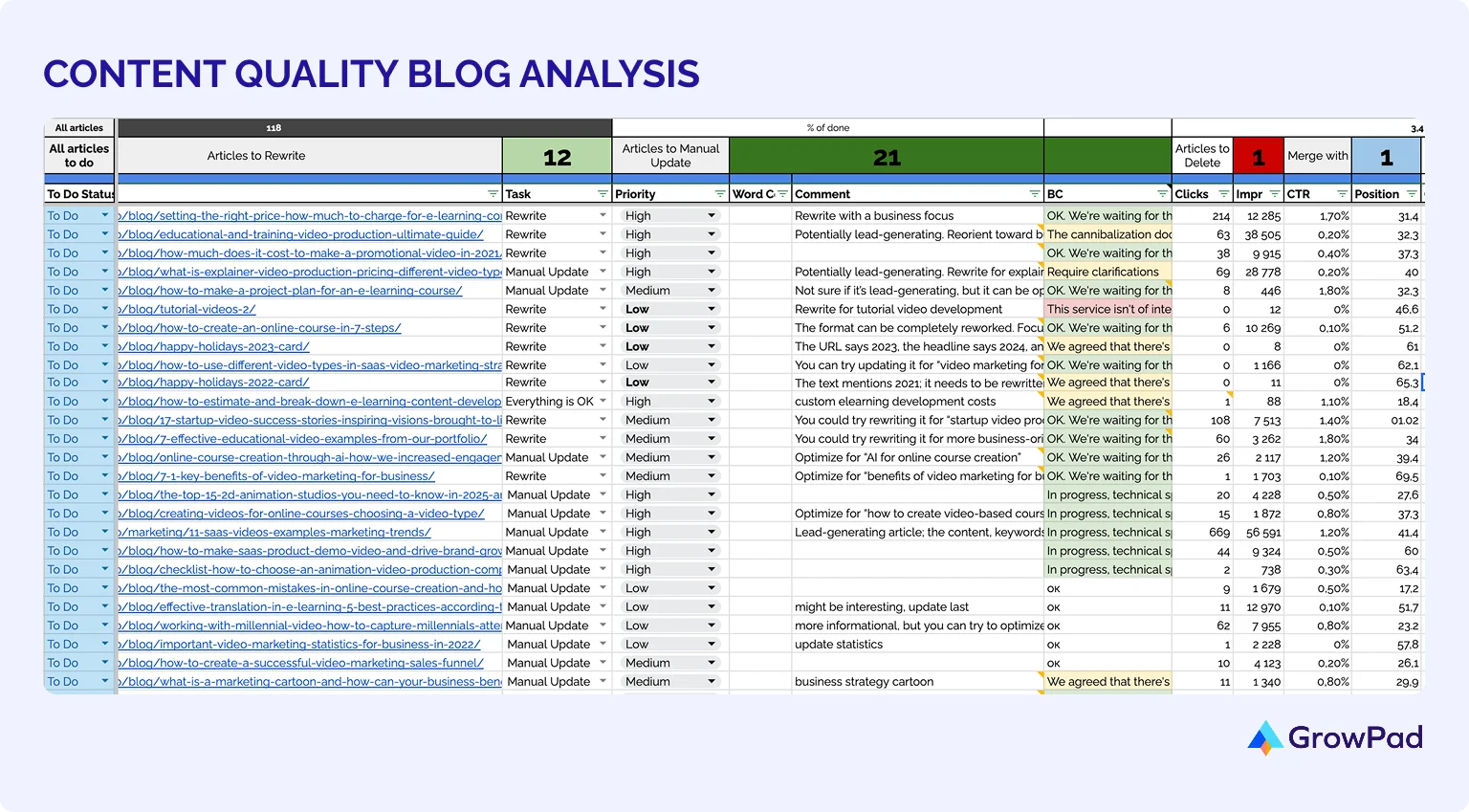
Result: +25% qualified leads in 3 months. Priority pages TOP-15 → TOP-5. New exposure in AI Overviews and LLMs.
Your competitors compound authority every month you wait. Book a content diagnostic — as a trusted SaaS content marketing company, we’ll show you exactly where your strategy should start.
Our content marketing services for SaaS companies start with an audit of existing pages, competing topics, and buyer intent. We then plan, produce, and improve content for each funnel stage, using briefs and reporting tied to qualified leads.
What you get: A full review of every page on your site with clear actions: rewrite, merge, delete, or optimize. We eliminate internal competition so your best pages rank.
What you get: Content marketing services for SaaS products built on briefs that specify buyer personas, search intent, keyword targets, competitor context, and conversion goals. Writers familiar with your niche then produce the planned assets.
What you get: High-converting BOFU pages like “Product vs. Competitor” and “Top X Alternatives,” built from templates proven across tens of SaaS brands we serve monthly.
What you get: Conversion-focused copy for commercial pages that rank for high-intent queries and drive demo requests, structured for Google, AI Overviews, and LLM search.
What you get: Content formatted to be cited by ChatGPT, Perplexity, and AI Overviews, increasing your brand visibility in the discovery layer that now drives SaaS buying.
What you get: A content marketing consultant for SaaS who guides strategy, editorial direction, and your internal team’s workflow, with production support from GrowPad when needed.
Your buyers don’t just search Google anymore. They ask ChatGPT, Perplexity, and Gemini for recommendations. If your SaaS content writing services don’t produce assets that both rank and get cited, you’re losing pipeline before prospects ever visit your site.
Our SaaS content writing company creates content that is:
We map every content asset to a specific funnel stage, buyer persona, and commercial keyword cluster. Nothing gets published without a clear pipeline job behind it.
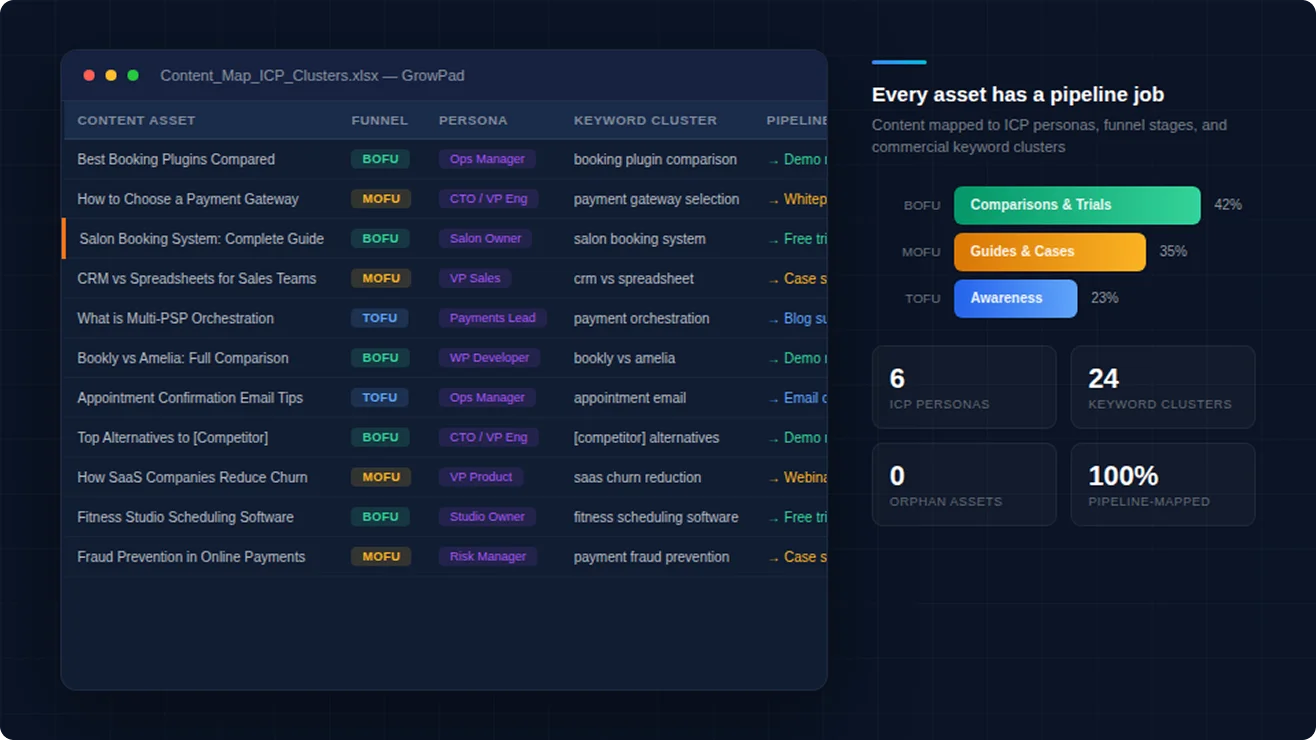
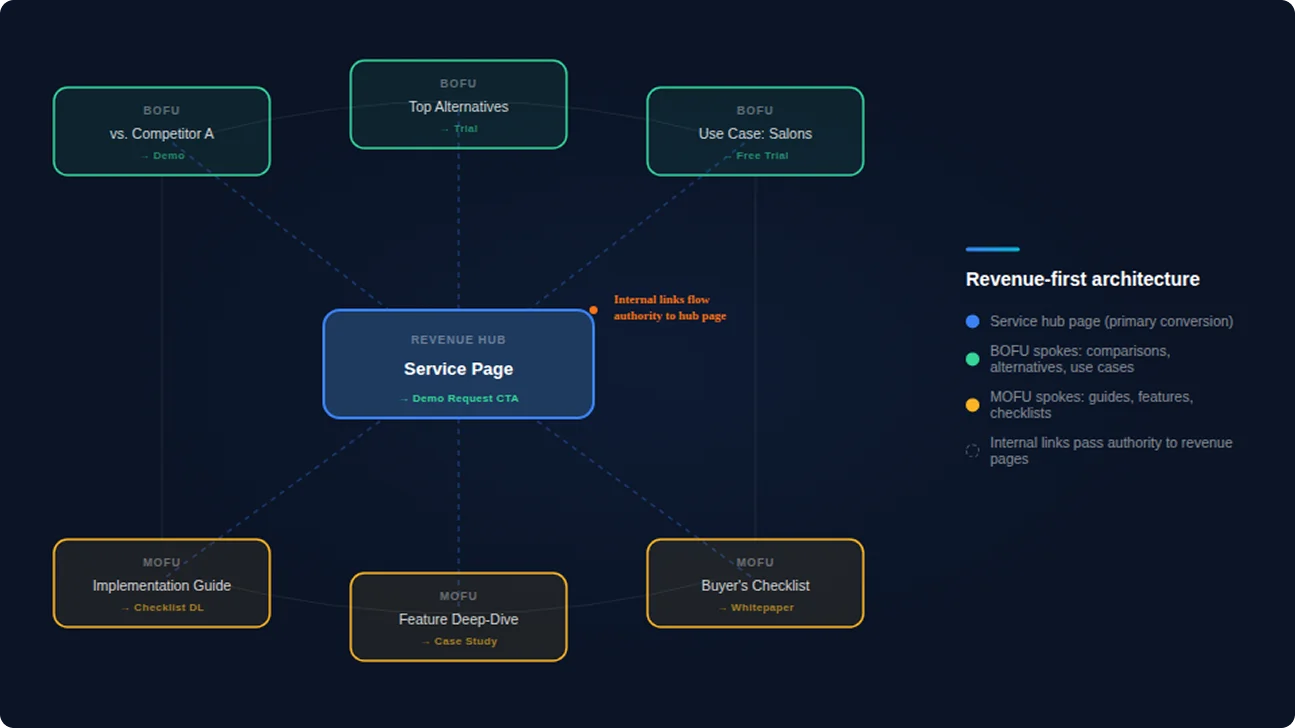
We structure your content around revenue pages: comparisons, alternatives, use cases, and feature-specific landing pages designed to attract decision-makers evaluating solutions like yours.
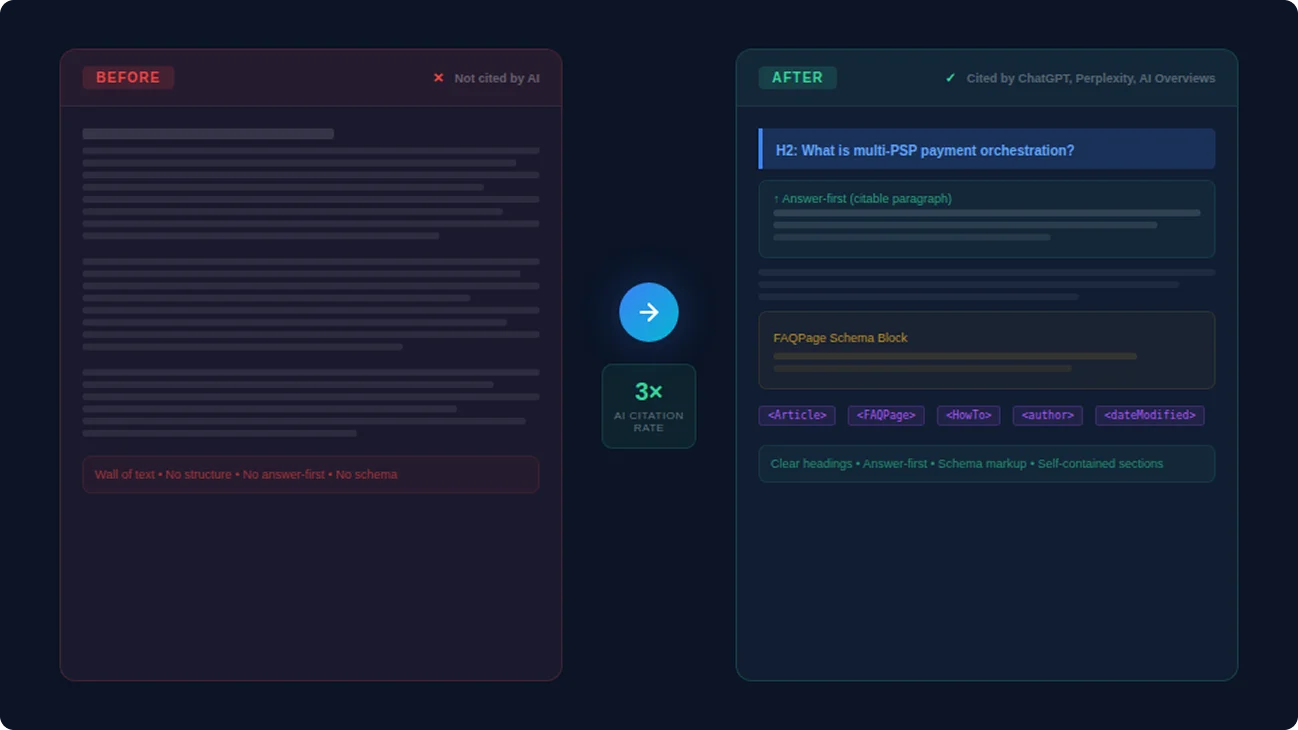
Every article follows our LLM-optimized templates: clear headings, structured data, concise definitions, and FAQ blocks that AI systems can extract, interpret, and cite in their responses.
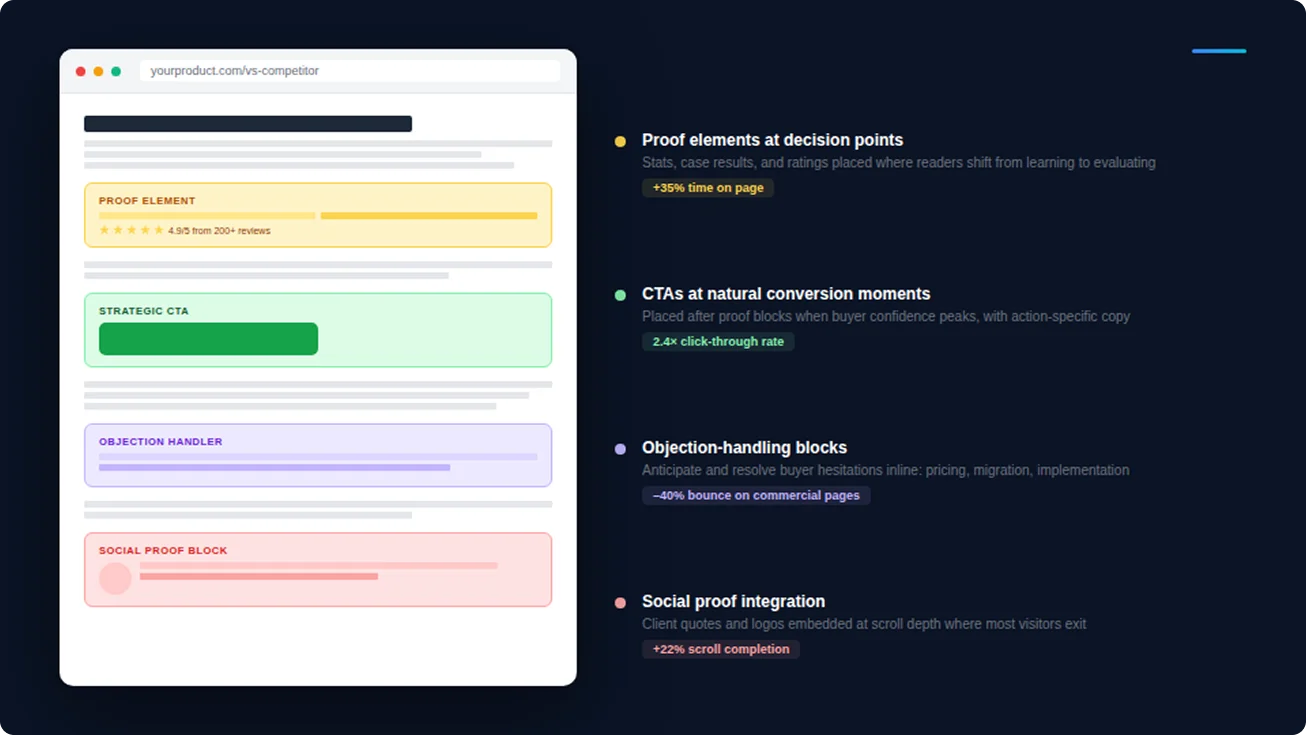
Our SaaS content writing firm embeds proof elements, strategic CTAs, and objection-handling blocks at natural decision points to turn organic traffic into qualified demos.
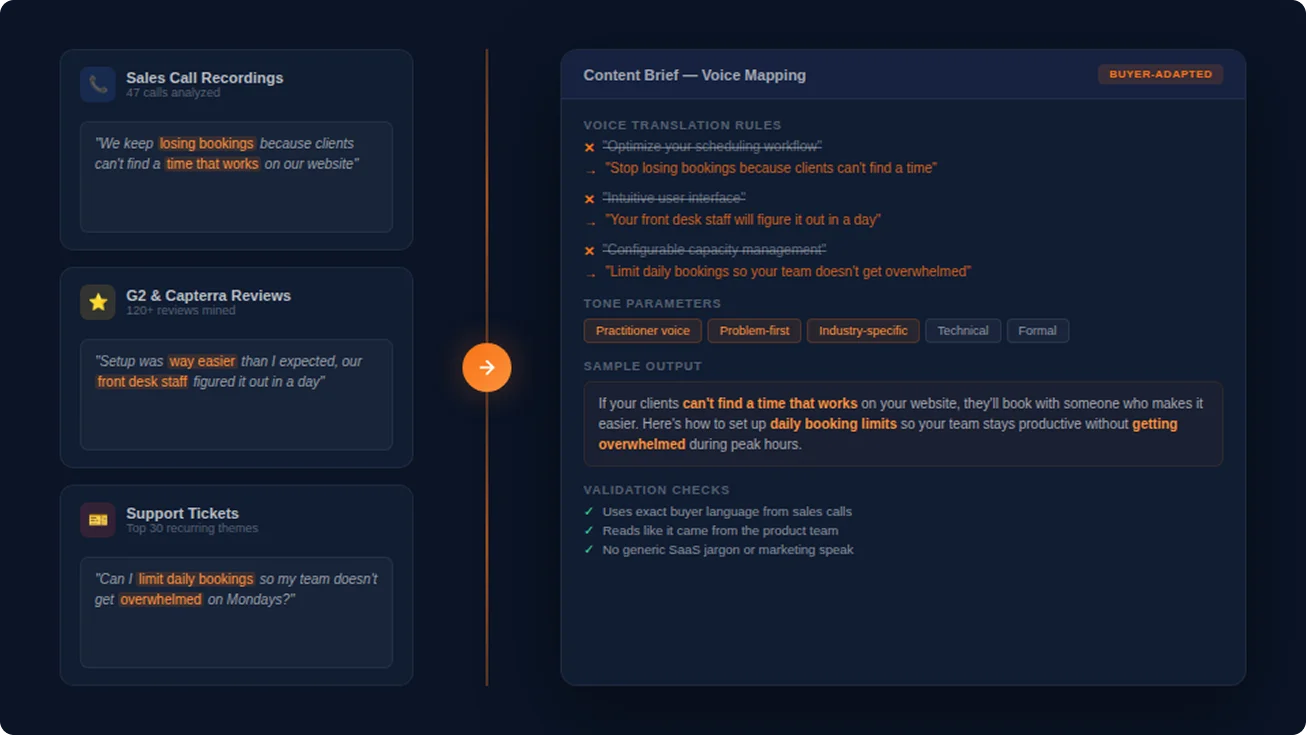
We study how your buyers describe their problems in sales calls, reviews, and support tickets. Every piece uses the exact phrasing your audience uses, so the content feels like it came from your team right to them.
Not sure where to invest next: SEO, content, or SaaS link building? Book a session with Oleksii to pressure-test your growth strategy. He’ll show you where your authority gaps are, which campaigns will compound fastest at your stage, and what to stop spending on.

Oleksii Andrusenko
Founder of GrowPad
Our content agency for SaaS startups builds an initial content system: priority pages, comparison and use-case briefs, and articles tied to buyer questions. Each asset has a defined role in search visibility and lead generation.
Best for: Seed to Series A SaaS companies building initial content authority.
“GrowPad created SEO-optimized page templates and a complete growth strategy that helped us scale to thousands of pages with real value for visitors. Everything was documented so our internal team could go further with the materials they provided.”

Andrei Terekhin
Founder, Headpix.ai
AI art generator
Warsaw, Poland
1–10 employees
Get practical, high-impact solutions from our content marketing agency for SaaS that help you compete with larger players. Our SaaS content writing company strengthens your visibility in Google and AI environments, turning steady traffic into qualified demo requests and a relevant pipeline.
Best for: Series B+ SaaS with $1M–$10M ARR looking to dominate content in their category.
“GrowPad performed content analysis and updates, SEO optimization, and link-building for our CRM. Within six months, we saw improved Google rankings and increased revenue. They always pushed us to move faster.”

Anna Pozniak,
Head of Marketing
NetHunt, CRM SaaS
Middletown, Delaware
10-50 employees
At scale, a SaaS content marketing expert helps your internal team decide which assets to update, consolidate, and produce next. GrowPad provides editorial direction, ready-to-implement briefs, and performance tracking tied to the pipeline.
Best for: Series C+ SaaS companies with $10M+ ARR defending category leadership.
“GrowPad started with a full content audit, identifying key issues and opportunities. They optimized high-priority existing pages, created new service pages, and enhanced content to better meet audience needs. Organic traffic has increased steadily, bringing in more qualified leads. Content updates have enhanced user engagement metrics, including time on page and lower bounce rates.”

Volodymyr Kuiantsev
Co-Founder, Akurateco
Payment Software SaaS
Portugal
51–200 employees
Here’s what to expect when you start working with a SaaS content marketing agency that’s run this process across 20+ engagements each month.
As a content discovery agency for SaaS, we begin by reviewing every page on your site: what ranks, what cannibalizes, what’s missing, and what should be removed. You get a full content inventory with clear priorities before any new content is planned.
Deliverables: Content inventory, cannibalization map, competitive content gap analysis.
As a SaaS content strategy firm, we build a content plan tied to your ICP, ARR targets, and competitive search landscape. Every topic is mapped to a funnel stage, keyword cluster, and conversion goal. You’ll know exactly what gets produced, in what order, and why.
Deliverables: Content roadmap, keyword cluster map, editorial calendar with pipeline attribution.

Every asset starts with a detailed brief: buyer persona, search intent, keyword targets, competitor benchmarks, and CTA placement. Our B2B SaaS content marketing services team then produces the content – blog articles, comparison pages, landing pages, case studies – ready for review.
Deliverables: Published content assets, structured briefs for internal teams, AI-optimized templates.
Published content goes through on-page SEO, internal linking, schema markup, and AI-ready formatting. We then amplify through digital PR placements, strategic link building, and thought leadership channels to build authority signals that both Google and AI systems reward.
Deliverables: Optimization reports, internal linking maps, distribution plan, mentions monitoring.

Every quarter, our team joins your leadership for a strategic review to set priorities for the next stage. Our content marketing agency for SaaS reports on rankings, content-attributed leads, and AI citation frequency – the numbers your board actually asks about.
Deliverables: Monthly performance dashboards, quarterly strategic reviews, content iteration recommendations.

The SaaS companies we work with come in with the same patterns. Here’s what shifts when our SaaS content marketing agency rebuilds content around structure, intent, and your actual buyer journey.


Whether you need full content production or a strategic inbound marketing partner for your existing team, our B2B SaaS content marketing services will show you exactly where to start and what to prioritize.
Choosing a provider for SaaS content marketing services starts with understanding what separates specialists from generalists. A professional content marketing agency for SaaS companies should demonstrate deep experience in B2B SaaS specifically, with verified case studies showing business outcomes like MQLs, demo requests, and pipeline growth. Look for transparent reporting, a clear methodology, and the ability to explain the reasoning behind every recommendation. In practice, ask to see actual deliverables: content briefs, audit frameworks, keyword cluster maps.
When we onboarded a fintech SaaS client, they had already worked with two previous providers who delivered generic content plans with no SaaS-specific expertise. The difference was visible in the first audit: we found 30%+ cannibalization that previous firms missed entirely. At GrowPad, we have 35+ verified reviews on Clutch from SaaS and tech companies with specific metrics on content-driven results. Choosing the right provider means choosing one whose process you can verify before signing.
SaaS buyers have complex, multi-touch journeys that span 3–6 months and involve 6–10 stakeholders.
Generic content marketing treats all audiences the same and produces blog posts that attract students, job seekers, and competitors instead of qualified buyers. A dedicated strategy maps every content asset to a specific funnel stage, buyer persona, and commercial intent.
For example, when Blue Carrot, an e-learning company, came to us, they had 118 published articles generating traffic but almost no qualified leads. The content attracted learning-interested readers who would never buy.
We restructured their entire content architecture around industry clusters and mapped each new article to a funnel stage with a clear conversion goal. Within 3 months, qualified leads increased by 25%. A dedicated strategy ensures every asset has a pipeline job, and every dollar spent on content can be traced back to a business outcome.
Content marketing compounds over time, and the timeline depends on where you start.
Companies with existing content libraries typically see the first ranking improvements within 2–3 months as foundational work takes effect: audits expose cannibalization, content optimization fixes structural issues, and updated pages begin climbing.
Significant pipeline impact usually appears in months 3–6 when content authority builds and commercial pages start converting. In our payment SaaS engagement, priority pages moved from positions #25–30 to #15–18 by month 3. By month 5–6, they broke into the Top-5 and organic MQLs doubled.
For companies starting with minimal content, like our WordPress plugin SaaS client, we focused on content velocity first, building industry-specific landing pages and comparison articles. New non-branded SQLs grew by 10% within just 3 months.
The key factor is coverage: the more relevant pages you have targeting real buyer queries, the faster the compounding effect kicks in.
Ranking content requires three layers working together: on-page SEO (keyword targeting, heading structure, internal linking), technical optimization (schema markup, Core Web Vitals, crawlability), and content architecture (one query = one page, with clear topical hierarchy).
Our content marketing agency for SaaS builds all three into every engagement. Every article goes through a pre-publish checklist that includes keyword placement, internal link mapping, schema requirements, and AI-ready formatting. After publishing, we monitor search performance weekly and iterate. For NetHunt, a CRM for sales & marketing teams, this approach meant merging 27+ competing pages into single authoritative URLs and restructuring internal links around priority commercial pages. The result: revenue pages climbed from TOP-20 to TOP-5 within 6 months, and SQL growth hit 25% despite the total page count going down.
Consistent rankings come from content architecture that Google trusts and AI systems can parse, combined with ongoing optimization that compounds month over month.
We track KPIs that matter in board meetings: organic MQLs and SQLs, demo requests from content pages, ranking positions for commercial keywords, AI citation frequency, content-attributed pipeline revenue, and engagement metrics that signal buyer intent (time on page for commercial URLs, CTA click-through rates, scroll depth on comparison pages).
We avoid reporting on metrics that look good but don’t connect to revenue, like total pageviews or social shares on informational posts.
Practically, each client gets a monthly dashboard showing which content assets drive leads, which pages are climbing or dropping, and where AI citations are appearing.
In our WordPress appointment booking plugin engagement, we tracked priority leadgen pages ranked by actual leads generated – a framework that showed which 15 industry-specific URLs contributed the most pipeline value.
Quarterly business reviews (QBRs) with your leadership team ensure KPIs stay aligned with evolving business goals. The benefit: your entire team speaks the same language about what content is producing and why.
Pricing depends on three factors: content volume (how many assets per month), competitive landscape (how aggressive your category is), and whether you need full-service execution or strategic support for an existing team.
Our B2B SaaS content marketing services are structured as monthly retainers because content marketing compounds over time. One-off projects rarely produce lasting results.
For SaaS companies at the growth stage ($1M–$10M ARR), engagements typically include a content audit, brief system setup, monthly article production, and ongoing optimization.
For earlier-stage companies, we often start with a focused sprint: audit, strategy, and initial content batch to prove the model before scaling. In our WordPress plugin SaaS engagement, the startup environment meant we prioritized speed and clarity. Detailed briefs and clear priorities helped the team move fast with limited resources.
Book a strategy session with our team to get a custom proposal based on your specific goals, competitive landscape, and internal capacity.
Content cannibalization is one of the most common and overlooked problems in SaaS content. It happens when multiple pages target the same or similar queries, splitting ranking signals so none of them performs well. Search engines can’t pick a winner, and your best commercial pages get buried.
In our experience, 20–40% of the average SaaS blog competes with itself. A proper content audit identifies every instance: overlapping keywords, similar headings, pages that rank for the same queries. The solution involves merging similar articles into single authoritative URLs, redirecting deleted pages, and restructuring internal links.
For our CRM SaaS client, we found 27+ cannibalizing pages across their CRM content. Instead of producing more articles, we consolidated, merged, and redirected. Thanks to it, revenue pages jumped from TOP-20 to TOP-5, and MRR grew despite fewer total pages on the site.
Fixing cannibalization often produces the fastest ROI of any content marketing activity because it unlocks ranking potential that already exists in your domain.
Yes. Many of our clients have internal writers, and our job shifts from full production to strategic enablement. We provide the brief system, editorial direction, keyword targets, competitive benchmarks, and conversion frameworks – your team handles the writing.
Every brief specifies the target buyer persona, search intent, funnel stage, and CTA placement so your specialists produce content that aligns with SEO and pipeline goals.
For our WordPress plugin SaaS client, we created templated documents for alternatives pages, comparison articles, and review posts. Their internal team then used those templates to scale content production independently.
As Andrei Terekhin, Founder of Headpix.ai, said in his Clutch review: “Everything was documented so our internal team could go further with the materials they provided.”
This model works especially well for growth-stage and established SaaS companies where content velocity matters but strategic direction is the bottleneck.
Every SaaS product serves specific verticals, and content that speaks to “all businesses” converts poorly. We build industry-specific content clusters by analyzing how buyers in each vertical describe their problems, evaluate solutions, and make purchasing decisions.
For our WordPress plugin SaaS client, a booking tool used by salons, fitness studios, dental clinics, tutors, and photographers, we created 15+ industry-specific landing pages, each targeting non-branded use-case queries relevant to that vertical.
The blog content was restructured around the same clusters so every article reinforced a specific industry hub. Articles previously covering generic topics like “pet market statistics” (where the plugin had no expertise) were flagged for deletion, while industry-relevant content was rewritten to strengthen the corresponding landing pages.
This vertical approach ensures your content is relevant to the specific buyers you’re trying to reach, rather than competing for broad keywords where larger competitors dominate.
Content drives pipeline through multiple channels beyond organic search. Comparison and alternatives pages convert visitors who are actively evaluating solutions – these typically have the highest demo request rates of any content type.
Case studies and use-case guides serve as sales enablement assets that your team shares during the evaluation stage. Landing pages targeting specific verticals or workflows capture demand that generic pages miss.
When content is structured for AI visibility, it also generates leads through LLM-driven discovery – buyers who ask ChatGPT or Perplexity for recommendations and see your brand mentioned.
In our fintech SaaS case, we built localized content for APAC, Europe, MENA, and LATAM audiences, creating entry points for buyers that the previous content library missed entirely.
Content also compounds: a well-structured comparison page published today continues generating demos for years. The benefit for SaaS companies is that content becomes a predictable, scalable lead generation channel that works alongside paid campaigns and outbound efforts.
Several of our clients operate under NDA, and we’ve built our process around confidentiality from day one. Case studies are published without naming the company (e.g., “WordPress plugin SaaS” or “fintech SaaS”), and all deliverables, such as content briefs, audits, strategy documents, live in shared project workspaces with controlled access. The work quality stays identical: full content audits, brief systems with persona mapping, keyword targeting, and performance tracking.
Our fintech SaaS client (NDA) received the same depth of content architecture work as any public client: 30%+ cannibalization identified, blog development strategy rebuilt from scratch, content briefs mapped to regional buyer personas across four continents. Their priority pages moved from positions #20–30 to Top-5 in five months.
Working under NDA doesn’t limit our approach; it just changes how we present results externally.
A general content agency produces articles, blog posts, and social media copy across many industries. A SaaS content marketing firm focuses exclusively on SaaS – which means understanding multi-touch sales cycles, complex buyer committees, BOFU conversion patterns, and how content architecture impacts pipeline.
The difference shows in the deliverables. General agencies deliver articles based on keyword volume. SaaS-focused firms like GrowPad deliver content audits that find cannibalization, brief systems mapped to buyer personas, comparison pages built from competitive intelligence, and content structured for AI citation.
Our SaaS content writing firm produces assets that serve both search engines and the 6–10 decision-makers involved in a typical SaaS purchase. In practice, this means every brief includes not just a keyword target but the buyer persona, their objections, proof points that resonate at their decision stage, and the CTA that matches their intent. The benefit: content that converts, not just content that ranks.
Every GrowPad engagement begins with a strategic consulting phase: content audit, competitive analysis, and roadmap development. This phase is built into our standard process, so you get SaaS content marketing consulting as part of the engagement rather than as a separate line item.
If you’re evaluating whether content marketing is the right investment for your stage, the most effective starting point is a 30-minute session with our founder Oleksii. He’ll diagnose your content architecture, identify where pipeline is leaking, and recommend whether you need full execution or strategic guidance for your existing team.
For companies that want a one-time strategic assessment before committing to ongoing work, we can scope a focused SEO audit-and-roadmap engagement. But in our experience, the audit almost always reveals enough quick wins (cannibalization fixes, page merges, SERP optimization) that clients choose to continue.

We guide your ideal clients to you by blending SEO, GEO, and LLMO, as well as content briefs and link building into a cohesive inbound marketing strategy.
Growpad Digital Growth S.L.B26742650
Avinguda Goleta, 3, local 7, despacho 4, Alicante, Spain, 03540
Tel: +34624126313