

CRM SEO AGENCY
GrowPad is an ERP & CRM SEO agency for sales CRM, vertical CRM, and pipeline management platforms. We help your ERP or CRM become the answer when sales leaders compare tools in Google, ChatGPT, Gemini, and AI Overviews. We measure the results in demos, SQLs, and new MRR.

SQLs in 6 months
For a core category keyword in 1 month
Five-star reviews on Clutch








CRM buyers switch, compare, and test integrations before they talk to sales. GrowPad’s Trajectory® methodology concentrates the first 90 days on the queries and prompts where that decision happens.
Sales leaders search for alternatives, comparisons, the best CRM for their team, and ways to migrate once they are unhappy with their current tool. We map these bottom-of-funnel queries for your CRM category. Then we build or repair the pages that answer them.
You get: Visibility at the moment teams decide to leave their current CRM, so rankings turn into demos, not only visits.
Many buyers search for a CRM or ERP that fits a specific setup, such as a CRM for Google Workspace, for agencies, for real estate, or for small sales teams. Large platforms rarely build strong pages for each use case. We identify the segments that match your ICP and build dedicated pages for them.
You get: Leads from buyers whose exact use case your product already fits, with less competition from category giants.
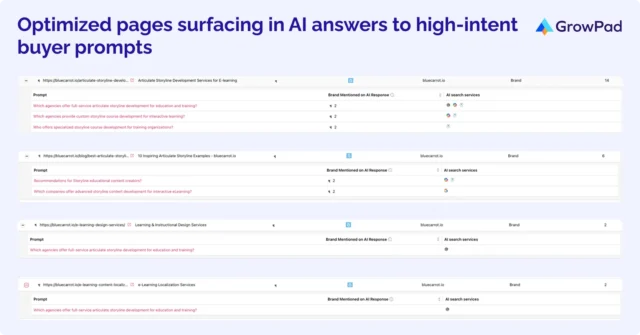
Founders and sales leaders increasingly ask ChatGPT, Gemini, and Perplexity which CRM or ERP fits their team size and stack. We track your product across buyer-relevant prompts and identify which sources those answers cite. That source list shapes our content and outreach priorities.
You get: Your ERP & CRM on the AI-generated shortlist buyers see before they open a single vendor website.
CRM sites often build large blogs about sales tips and pipeline basics that compete with each other and with product pages. We find overlapping pages, merge them, and redirect authority to the URLs tied to SQLs.
You get: Stronger rankings for revenue pages without paying for content volume that dilutes them.
Most CRM sites already have feature, integration, and use-case pages close to page one. We assess these assets in the first weeks. We fix the ones with commercial potential first.
You get: Faster results from existing pages, often before any new content goes live.
We set baselines at onboarding: ACV, trial-to-paid rate, close rate, and lead volume. We review qualified opportunities monthly. Each quarter, we assess organic search’s contribution to new MRR.
You get: A clear view of what organic and AI search add to your pipeline, measured in the same CRM you sell.
CRM is one of the most crowded software categories, and its buyers behave differently from buyers of other SalesTech and marketing tools. Switching costs, data migration, and team adoption shape every search.
Salesforce, HubSpot, Pipedrive, and Zoho dominate broad queries like “CRM software” with massive domain authority. A head-on fight rarely pays off for a mid-market CRM. We find the segments, integrations, and team types where your product can win first, then expand.
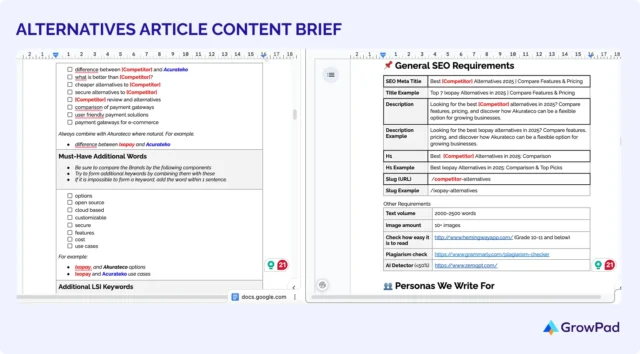
Most CRM buyers already use a spreadsheet or another CRM. Their searches are about migration, pricing, missing features, and alternatives to a specific tool. Pages must answer switching concerns directly, including data import, setup time, and team adoption. Otherwise, buyers stay with what they have.
CRM blogs attract large audiences with generic sales advice. That traffic rarely converts, and it can compete with commercial pages for the same intent. We separate informational content from commercial pages and measure each by its contribution to SQLs.
Sales teams choose a CRM that works with their email, calendar, calling, and billing tools. Integration pages are often thin or missing, even though buyers search for them before booking a demo. We prioritize the integrations that match your ICP’s stack.
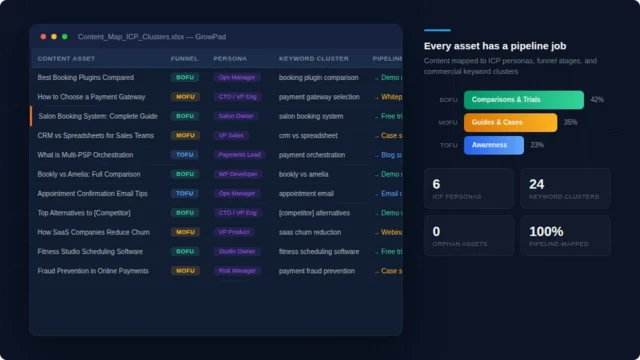
CRM websites with big content libraries are exposed to ranking volatility after Google Core Updates. Adding more content without a framework increases the risk. We stabilize rankings through consolidation, intent clarity, and internal linking before scaling.
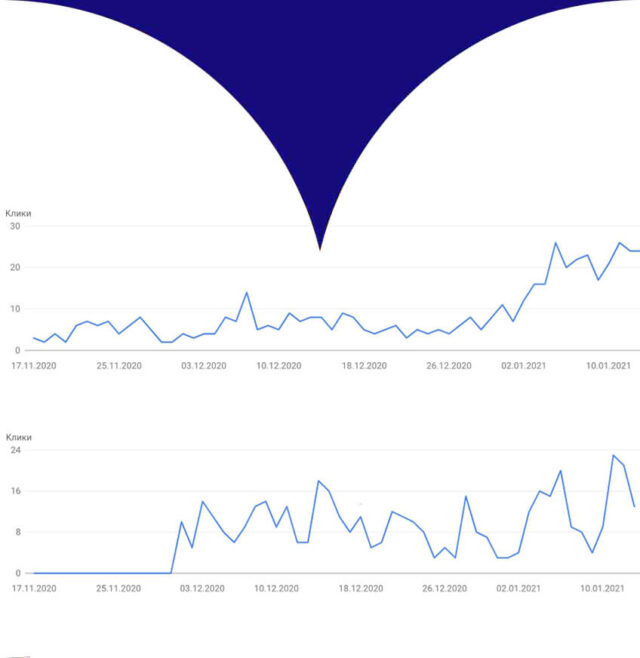
A strategy call shows where your CRM stands in Google and AI search against the competitors your buyers compare you with.
GrowPad owns the agreed scope of organic and AI search as a channel. We deliver strategy, execution, and measurement as a partner, not as a task vendor.
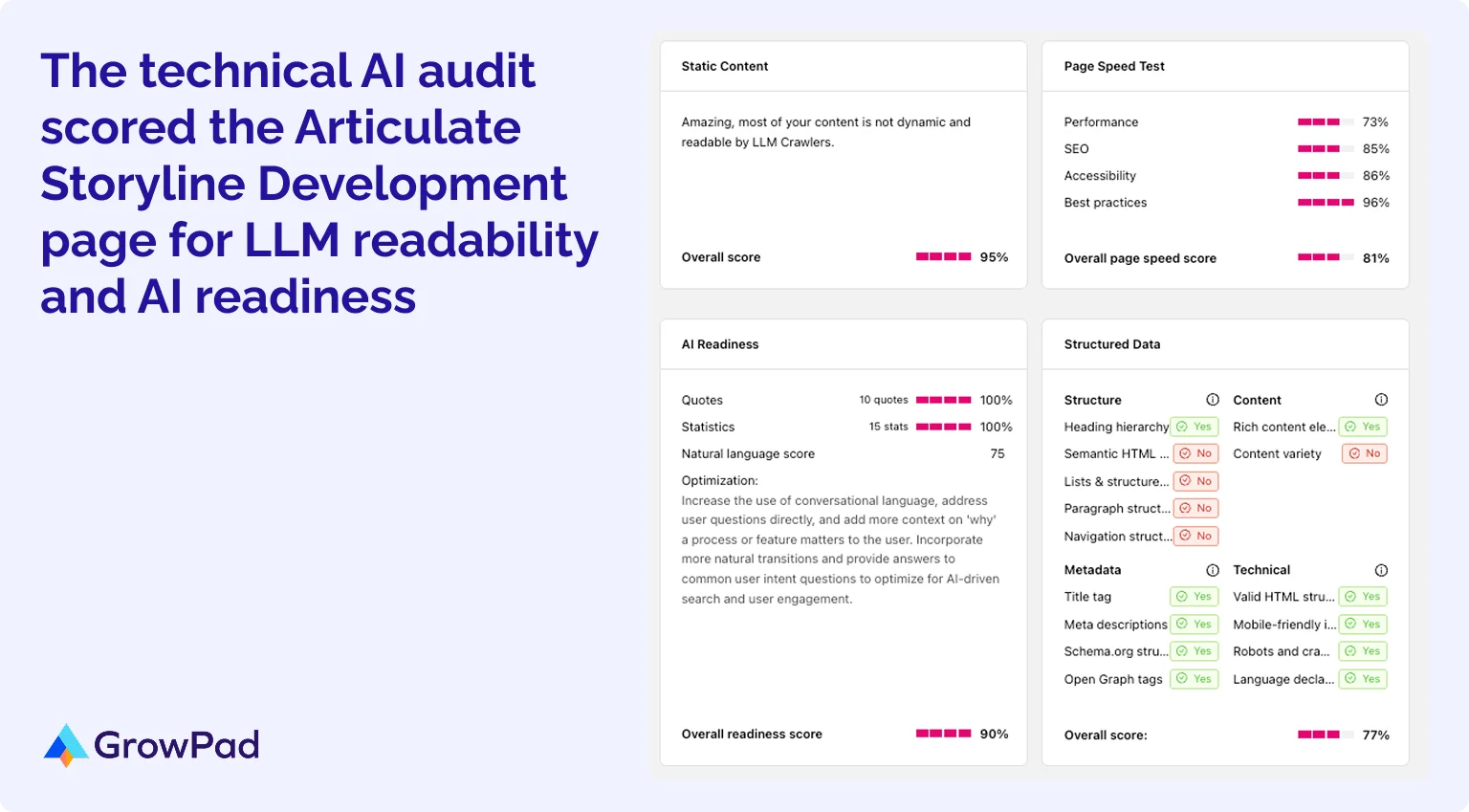
We review rankings, technical health, cannibalization, content overlap, backlink profile, and presence in AI answers for your CRM category. The audit sets your performance baseline and prioritizes the first quarter. Learn more about our SEO audit process.
You get: A clear list of what blocks SQLs today and what to fix first.
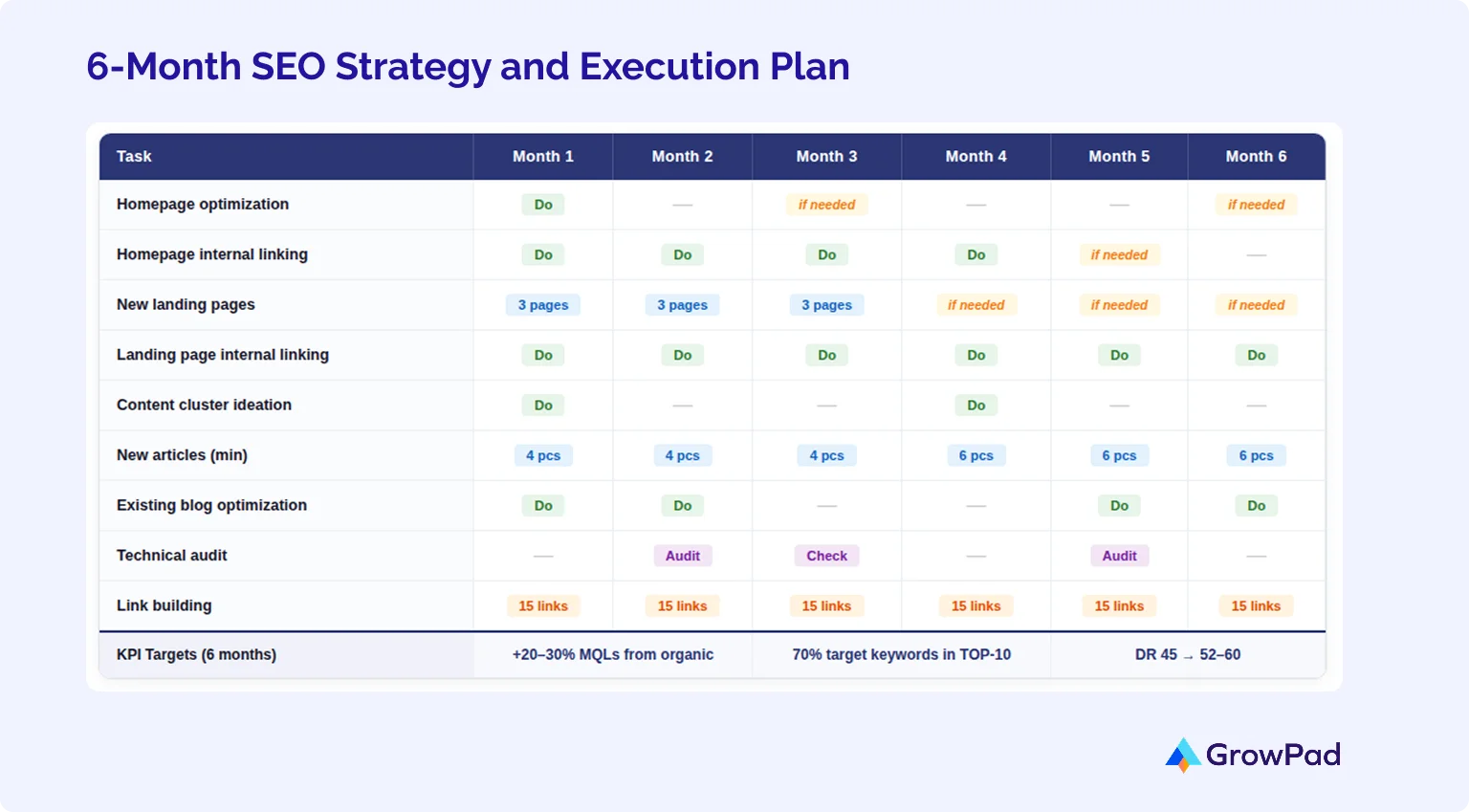
You receive a roadmap of which comparison, switching, integration, and use-case pages to own first, and how to sequence content and authority work. We update it monthly as ranking and AI visibility data come in.
You get: A budget spent on pages closest to new MRR, not on generic sales topics.
We write feature, use-case, integration, industry-specific, comparison, and alternatives pages for buyers at the evaluation stage. Supporting content reinforces these pages instead of competing with them. Growth and Accelerate packages include publishing into your CMS. Starter includes recommendations plus one page implemented.
You get: Pages that answer switching concerns and move evaluators toward a demo or trial.
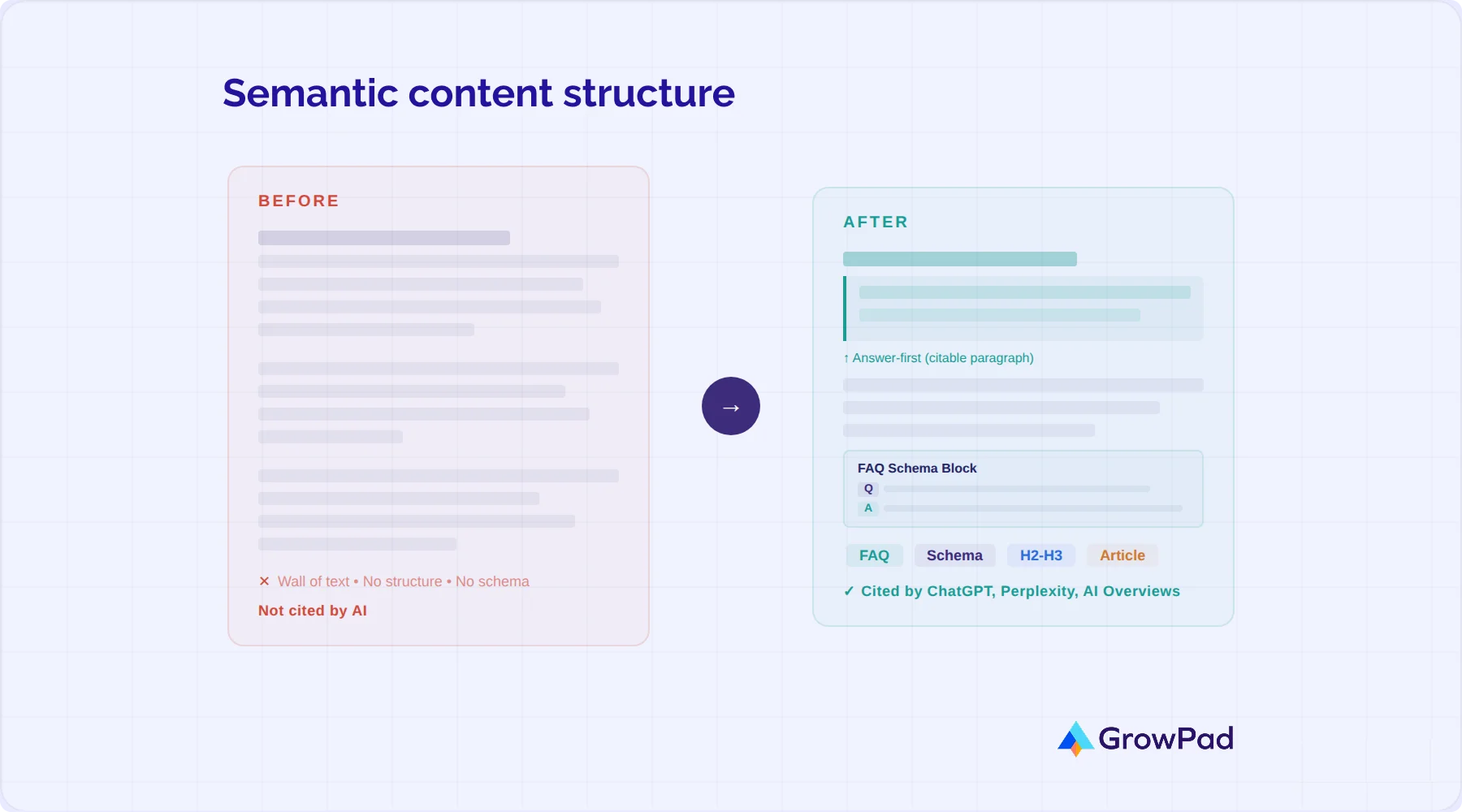
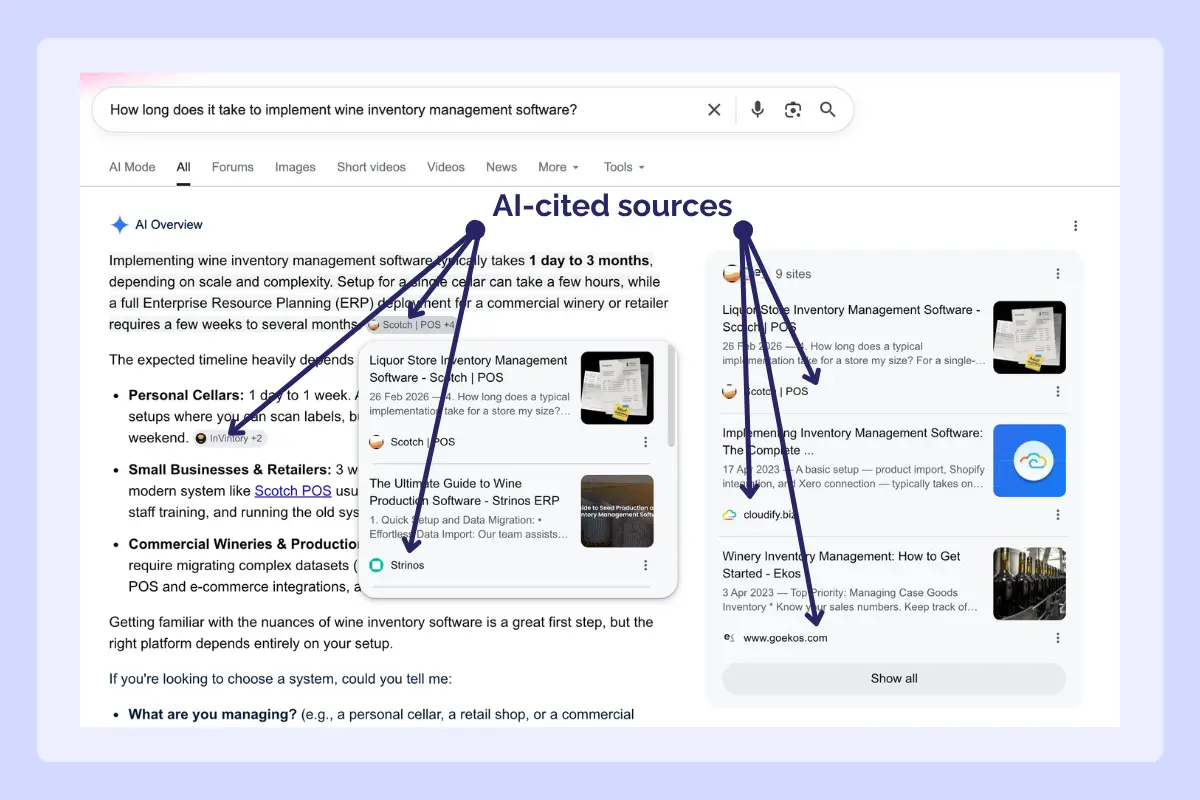
We secure editorial placements on relevant sales and business publications, “best CRM” listicles, and software directories. Outreach prioritizes the sources ChatGPT, Gemini, and AI Overviews already cite for your category. Every placement is approved before going live. See our link-building and AI-citation service for the process.
You get: Mentions in the sources buyers and LLMs already trust when they compare CRMs.

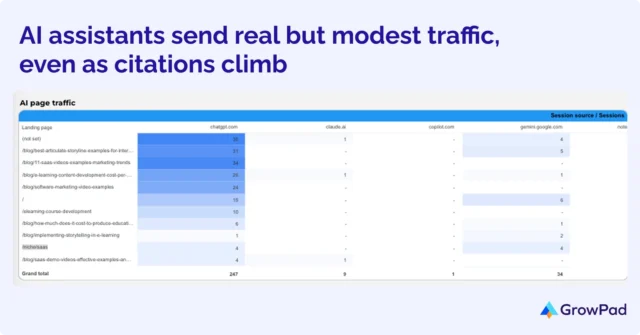
We track your share of voice across buyer prompts and compare it with named competitors. We then structure content and entity signals so LLMs connect your CRM to specific team types, industries, and workflows. Our GEO and AEO services describe the full workstream.
You get: A measurable share of voice against competing CRMs in the AI answers your buyers read.

Rankings and traffic are diagnostics. The outcomes of working with a CRM SEO agency below connect search work to revenue.
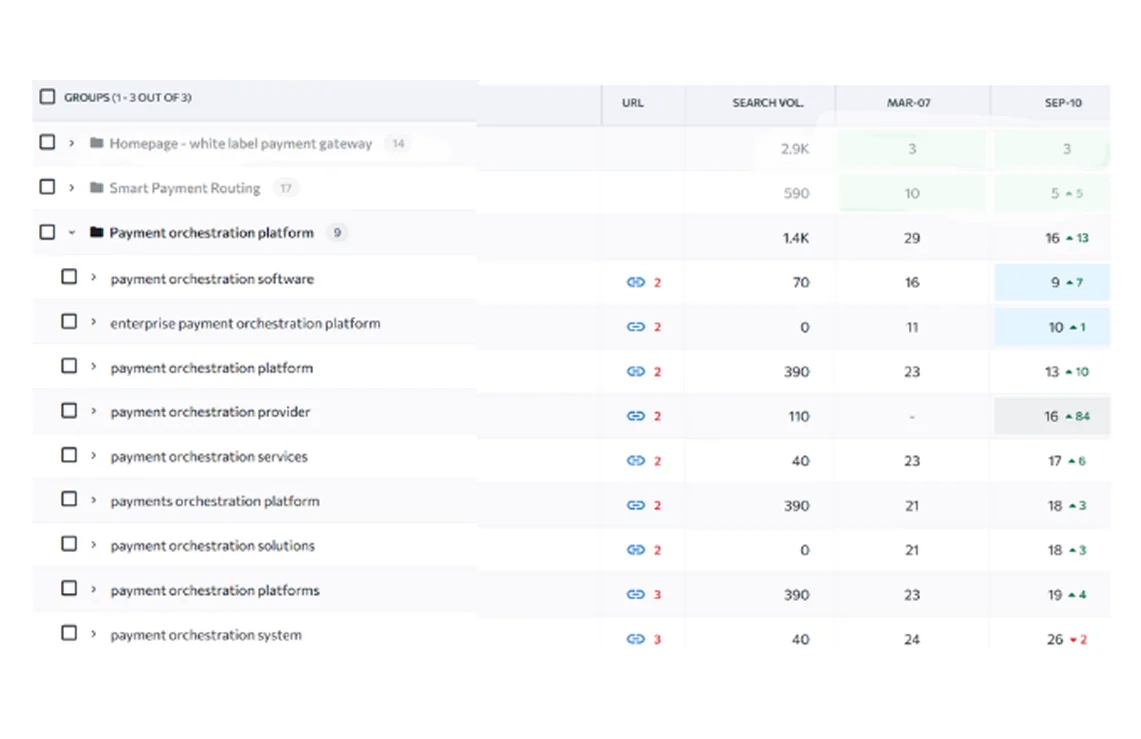
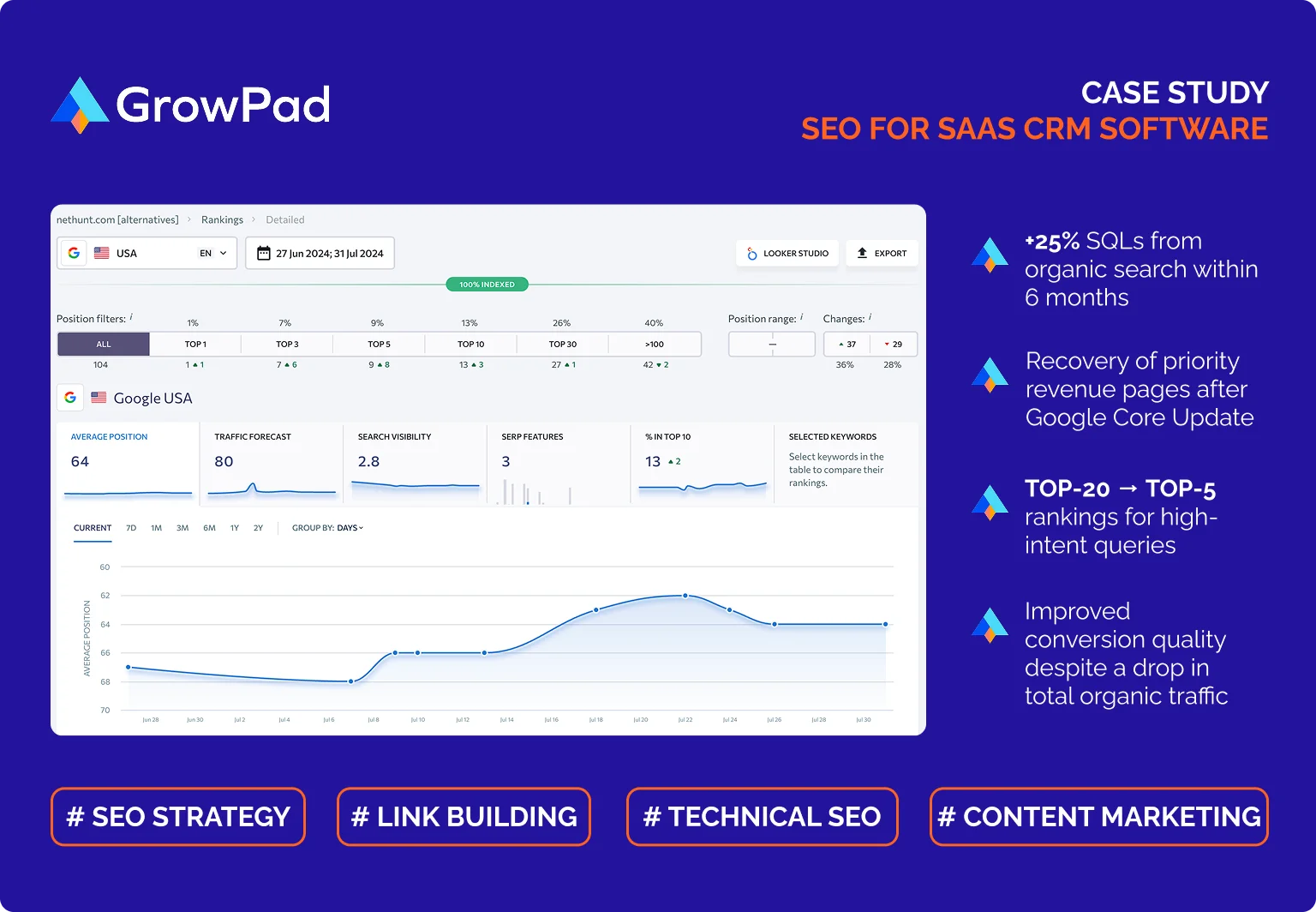
NetHunt, a SalesTech CRM platform for sales and marketing teams, had strong organic traffic but weak SQL output. After a Google Core Update in 2023 and several earlier drops, rankings were volatile, overlapping content competed for the same intent, and key revenue pages sat below their potential.
GrowPad shifted SEO from traffic volume to revenue impact by isolating pages tied to SQLs and new MRR, primarily CRM use cases and integrations. The team audited content overlap, merged competing articles into stronger pages, and restructured internal linking around priority URLs. Early signals appeared within the first month. Within six months, SQLs from organic search grew by 25%, and priority pages moved from TOP-20 into TOP-5 for high-intent queries such as “CRM for Google Workspace.” New MRR increased even as total organic sessions declined.
Not sure where to invest next: SEO, content, or SaaS link building? Book a session with Oleksii to pressure-test your growth strategy. He’ll show you where your authority gaps are, which campaigns will compound fastest at your stage, and what to stop spending on.

Oleksii Andrusenko
Founder of GrowPad
GrowPad helped us refocus SEO on what actually drives revenue. They were proactive, pushed us to move faster, and within six months, we saw stronger rankings and more SQLs from organic search.
Anna Pozniak, Head of Marketing, NetHunt – SalesTech CRM


We will review your category, competitors, and AI visibility, then explain what is realistic at your stage.
A CRM SEO agency builds strategy around how sales teams replace their current CRM: switching queries, comparisons, integrations, and searches for a CRM built for a specific industry or team. It also plans around category giants that own broad terms. GrowPad adapts its methodology to these CRM-specific buying patterns.
We work with sales CRMs, vertical CRMs, ERPs, business intelligence, SalesTech companies, and pipeline management platforms that have product-market fit. Both product-led and sales-led models are a fit. We are not a fit for pre-product companies or teams expecting results within 60 days.
GrowPad CRM SEO programs start from $3,000 per month. Every engagement begins with a paid three-month Sprint that includes a CRM SEO audit and strategy. Link placements and GA4 setup are quoted separately when needed.
Early ranking signals usually appear within 2 to 4 months, and sooner when the work starts with consolidation of existing pages. First SQLs from organic search follow once commercial pages rank and convert. Durable authority against category leaders takes six months or longer.
Yes. We track your CRM across buyer prompts in ChatGPT, Gemini, Perplexity, and AI Overviews. We then run outreach to the sources those answers cite. We report AI share of voice quarterly but do not guarantee citations.
Yes. When low-intent pages are consolidated, and authority moves to commercial URLs, traffic can drop while SQLs and new MRR grow. In our NetHunt case, SQLs rose by 25% in six months as total organic sessions declined.
No. GrowPad focuses only on SEO and AI search. This lets us own the organic channel fully instead of spreading effort across unrelated channels.

We guide your ideal clients to you by blending SEO, GEO, and LLMO, as well as content briefs and link building into a cohesive inbound marketing strategy.
Growpad Digital Growth S.L.B26742650
Avinguda Goleta, 3, local 7, despacho 4, Alicante, Spain, 03540
Tel: +34624126313